
Wire Phosphating &
Pickling Plant
Manufacturer in India
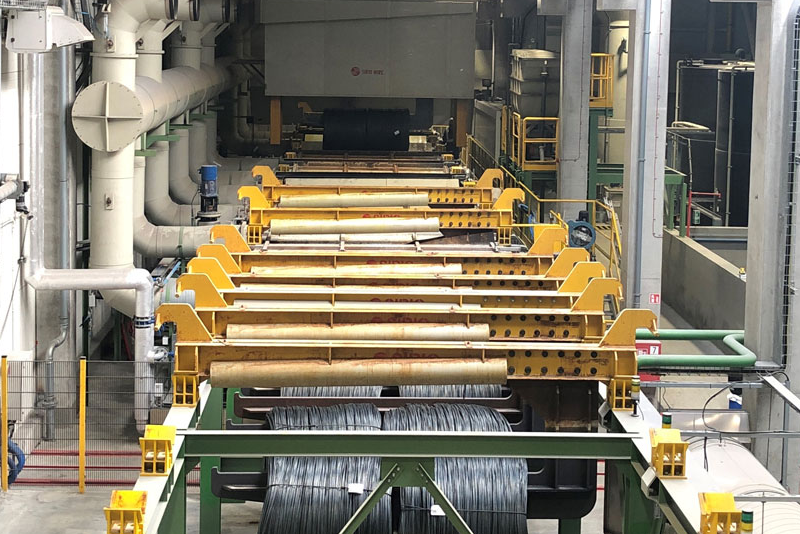
Suntech Energreen designs, manufactures and commissions wire pickling lines and zinc and manganese phosphating lines for wire drawing, fastener wire, welding wire and spring wire units. One engineering team builds the tanks, the fume exhaust, the effluent system and the controls, so your wire leaves the line clean, coated and ready to draw.
ISO
9001:2015 Certified
In-House Manufacturing
Tanks, frames, controls
Wire Pickling Lines
HCl and H₂SO₄ systems
Phosphating Lines
Zinc and manganese phosphate
Fume and Effluent Control
Scrubber, ETP, acid recovery
Spares and Training
Support after commissioning
Wire Phosphating and Pickling Plant Manufacturer and Supplier in India
Suntech Energreen Private Limited is a wire phosphating and pickling plant manufacturer in India. From our works in Arni, Tamil Nadu, we build the process lines that prepare steel wire for drawing, cold heading, welding and spring making. Every plant is built in-house, so the tank lining, the pump selection, the hoists and the control panel are designed to work as one system.
Wire rod arrives from the mill covered in scale and rust. Before it can be drawn, that scale has to come off, and the clean surface needs a carrier coating that holds drawing lubricant. Our wire pickling plant removes the scale. Our wire phosphating plant lays down the zinc phosphate or manganese phosphate layer that lets the wire pass through the die without galling. Together they decide die life, surface finish and the number of breaks on your drawing machine.
We have worked in surface treatment since 2010 and bring more than 18 years of engineering experience to each project. We also supply the spares that keep these lines running: chemical pumps, filters, rectifiers, fume exhaust systems, dosing systems and process tanks.
Wire Pickling and Descaling Lines
Acid pickling lines for wire rod and drawn wire with degreasing, cascade rinsing, fume capture and neutralisation built into the layout.
Zinc and Manganese Phosphating Lines
Phosphating tanks with temperature control, free and total acid dosing and a lubricant or soap stage for drawing-ready wire.
Controls That Fit Your Floor
Manual, semi-automatic and PLC-controlled hoist and transporter systems, sized to your coil weight and shift pattern.
Spares, Service and Training
Spares from one supplier, plus hands-on training for your operators on bath control and plant care.
Wire Pickling Plant: Stage-by-Stage Process Flow
A pickling line strips mill scale and rust from wire rod or drawn wire without attacking the base steel. Each stage below protects the next, and skipping any of them shows up later as poor coating or broken wire.
Coil Loading
Coils are loaded on hoist-fed carriers or a pay-off stand at controlled tension.
Hot Degreasing
Alkaline bath removes drawing oil, grease and organic soil.
Cold Water Rinse
Counter-flow rinsing stops alkali carry-over into the acid tank.
Acid Pickling
HCl or H₂SO₄ dissolves scale and rust. Fume hoods capture the acid mist.
Rinse and Neutralise
Fresh water and a mild neutraliser remove acid and prevent flash rust.
Dry or Move On
Wire is dried or passed directly to the phosphating stage.
Wire Phosphating Plant: How the Coating Line Works
Phosphating turns a clean steel surface into a crystalline layer that grips drawing lubricant. The layer is only as good as the bath chemistry and the temperature control behind it, which is why we engineer both into the plant.
Pickled Wire In
Clean, scale-free wire enters from the pickling section or the rinse tank.
Surface Activation
A conditioning bath seeds the surface so crystals form fine and even.
Phosphating Tank
Heated zinc or manganese phosphate bath builds the coating layer.
Rinse
Water rinse removes loose phosphate sludge and unreacted acid.
Lubricant or Borax Stage
Soap, borax or neutralising treatment prepares the layer for the die.
Dry and Unload
Hot air drying, then coils move to the wire drawing machine.
Wire Phosphating and Pickling Plants We Design and Manufacture
Choose a single process line or a combined pickling and phosphating plant. Every plant is sized to your coil weight, wire diameter and daily tonnage.
Wire Pickling Plant
Hoist-operated or automated acid pickling line for wire rod coils and drawn wire. Includes degreasing, pickling, rinsing and neutralising tanks, fume hoods and a drain system to the effluent plant.
Zinc Phosphating Plant for Wire
Zinc phosphate coating line for general wire drawing, fastener wire and cold heading wire. Heated tanks, bath chemistry dosing and a lubricant stage give a uniform, fine-crystal coating.
Manganese Phosphating Plant
Manganese phosphate line for wire that needs wear resistance and anti-seize behaviour. Suited to spring wire, high-carbon wire and components with sliding contact.
Combined Pickling and Phosphating Line
One layout from scale removal to phosphate coating, with transfer between tanks managed by a hoist or transporter. Saves floor area and removes manual handling between processes.
Fume Exhaust and Scrubber System
Hoods, FRP ducting, blowers and wet scrubbers that capture acid mist at the tank and clean the air before it leaves the stack. Designed together with the pickling line.
Effluent Treatment and Acid Recovery
Neutralisation, settling and filtration for pickling and phosphating waste. Spent acid and sludge are handled in a defined route, which helps you stay within pollution control board requirements.
Get Expert Wire Phosphating & Pickling Plant Manufacturer in India
Looking for reliable Wire Phosphating & Pickling Plant Manufacturer in India? Get in touch with our experts for efficient, customised, and high-performance surface treatment plant solutions designed for your industrial requirements.
Wire Pickling Plant vs Wire Phosphating Plant
The two processes do different jobs and run back to back. Knowing which problem each one solves helps you decide whether you need one line or both.
Wire Pickling Plant
- Removes mill scale, rust and oxide from the wire surface
- Uses hydrochloric or sulphuric acid, preceded by alkaline degreasing
- Prepares wire for phosphating, drawing or plating
- Needs fume extraction and effluent handling for spent acid
- Bath control focuses on acid strength and dissolved iron
- Output is bare, clean steel that must be coated promptly
Wire Phosphating Plant
- Builds a crystalline zinc or manganese phosphate layer on clean steel
- Works as a carrier that holds soap or oil lubricant in the die
- Lowers friction, die wear and the risk of wire breaks
- Adds short-term corrosion protection between operations
- Bath control focuses on free acid, total acid, temperature and iron
- Output is a coated wire ready for the drawing machine
Why Choose Us as Your Wire Phosphating and Pickling Plant Manufacturer
Wire lines run every shift. We build them to be easy to operate, simple to maintain and clear about cost from the first quotation.
Complete In-House Manufacturing
Fabrication, tank lining, assembly and testing happen under one roof in Arni, so you deal with one team from drawing to dispatch.
Pickling and Phosphating From One Supplier
Both processes are designed to match, which avoids mismatched tank sizes, cycle times and hoist capacity.
Modular and Transparent Pricing
You see what each tank, hoist, scrubber and controller costs. Add or remove modules without surprises later.
Engineered to Your Coil and Output
We size the plant to your coil weight, wire diameter range and tonnage per shift. We do not push a catalogue model.
Safety and Environment Built In
Fume capture, secondary containment and an effluent route are part of the design, not an add-on after commissioning.
Spares and Training After Handover
We supply pumps, filters, rectifiers, tanks and valves, and train your team on bath control and routine care.
How We Deliver Your Wire Phosphating and Pickling Plant
A clear five-step path from your first enquiry to a plant producing coated wire.
Requirement Study
Wire grade, diameter, coil weight, tonnage and site layout review
Design and Proposal
Line layout, tank sizes, material choice and itemised offer
Manufacturing
Tank fabrication, hoist and control assembly in our works
Testing and Dispatch
Trial run, inspection and packing for safe transport
Installation and Training
Erection, bath make-up, trial coating and operator training
Wire Phosphating and Pickling Plant: Typical Specifications
The values below show the usual design range. Final figures are fixed after we study your wire and production plan.
| Parameter | Typical Specification | Notes |
|---|---|---|
| Plant Type | Pickling, phosphating, or combined line | Built to order |
| Wire Material | Low, medium and high carbon steel wire rod | Alloy wire on request |
| Pickling Acid | Hydrochloric acid or sulphuric acid | Selected by wire grade and cost |
| Phosphate Type | Zinc phosphate or manganese phosphate | Chosen by end use |
| Process Tanks | PP, FRP, rubber-lined MS or SS as per bath | Chemical-compatible lining |
| Heating | Steam, electric or thermic fluid | Per bath temperature need |
| Handling | Manual hoist, semi-automatic or PLC transporter | Sized to coil weight |
| Rinsing | Counter-flow and still rinse tanks | Reduces water use |
| Fume Control | Hoods, FRP ducts, blower and wet scrubber | Designed with the line |
| Effluent | Neutralisation, settling and filtration | Treats pickling and phosphating waste |
| Dosing | Manual or automatic chemical dosing | Keeps bath strength steady |
| Control Panel | Timers, temperature controllers or PLC | Upgrade path available |
Wire Pickling and Phosphating Plants Across Key Industries
Any unit that draws, forms or welds steel wire depends on a clean, well-coated surface. These are the sectors our lines support.
Fastener and Cold Heading Wire
Automotive Wire Components
Welding Wire and Electrodes
Spring Wire Manufacturing
Wire Drawing Units
Wire Rope and Cable
Fencing and Binding Wire
Nails, Mesh and Hardware
Complete Guide to Wire Phosphating and Pickling Plants in India
What Is a Wire Pickling Plant?
A wire pickling plant is a set of tanks, hoists and exhaust equipment that removes mill scale and rust from steel wire rod using acid. Hot-rolled rod leaves the mill covered in iron oxide. If that oxide stays on, it scratches dies, cuts their life and leaves a rough, uneven wire. Pickling dissolves it away in a controlled bath, usually hydrochloric acid for faster, cleaner results or sulphuric acid where cost and handling favour it.
A good pickling plant is more than an acid tank. It includes alkaline degreasing, counter-flow rinsing, a neutralising stage, fume hoods and a safe drain route. As a wire pickling plant manufacturer in India, we build all of these as one system so the acid stays in the tank, the fumes stay out of the shed and the wire comes out evenly clean.
What Is a Wire Phosphating Plant?
A wire phosphating plant applies a thin crystalline phosphate coating to clean steel wire. The coating is not decorative. It acts as a porous carrier that traps soap or oil, so a film of lubricant stays between wire and die during drawing. That film cuts friction, reduces heat and lets you draw at higher speed with fewer breaks.
Two coatings dominate. Zinc phosphate is the standard choice for drawing and cold heading wire. Manganese phosphate gives a harder, more wear-resistant surface and suits springs and parts with sliding contact. A wire phosphating plant manufacturer in India must get tank temperature, bath balance and coating weight under control, because a patchy coating shows up as die scoring and rejected coils.
Why Pickling and Phosphating Belong Together
Phosphate only forms on clean steel. Any scale left behind blocks the reaction and leaves bare spots. That is why wire plants run pickling first and phosphating straight after, with rinsing in between. When the two processes are designed together, tank sizes, dwell times and hoist movements match, and the wire does not sit wet in the air long enough to flash rust.
A combined line also reduces handling. Coils move once from loading to the drawing machine, which saves labour, floor area and the damage that comes from repeated lifting. For new wire drawing units, this is usually the most economical way to start.
Choosing Between Zinc and Manganese Phosphate
Zinc phosphate gives a fine, uniform layer that holds drawing lubricant well and costs less to run. It suits most carbon steel wire for fasteners, nails, binding wire and general drawing. Manganese phosphate runs hotter and builds a denser, darker coating that resists wear and seizing. It is the better fit for spring wire and parts that work under load. If your product range covers both, we can design a line with separate baths so one plant serves both needs.
Environment, Safety and Compliance
Pickling and phosphating create acid mist, spent acid and iron-bearing sludge. Handled badly, they harm workers, damage buildings and invite action from the pollution control board. We design capture at the source with hoods and FRP ducts, clean the exhaust through a wet scrubber, and route rinse water and spent baths to a neutralisation and settling system. Sludge is collected in a defined step so it can be disposed of properly.
Good design also lowers running cost. Counter-flow rinsing cuts water use. Correct dosing prevents over-feeding of chemicals. Filters keep baths clean for longer. These details are small on paper and large over years of production.
Frequently Asked Questions
What does a wire phosphating and pickling plant do?
The pickling section removes scale and rust from wire rod or drawn wire. The phosphating section then coats the clean wire with zinc or manganese phosphate, which carries drawing lubricant and protects the die. Together they prepare wire for drawing, cold heading and forming.
Which is better for wire pickling, hydrochloric or sulphuric acid?
Hydrochloric acid works faster at room temperature and gives a cleaner surface, but its fumes need strong capture. Sulphuric acid is often cheaper per litre but usually needs heating and longer dwell time. We recommend based on your wire grade, throughput and fume control setup.
When should I choose manganese phosphate instead of zinc phosphate?
Choose manganese phosphate when the wire or part needs higher wear resistance or anti-seize behaviour, as in spring wire. Choose zinc phosphate for general drawing, nails, binding wire and fastener wire where a fine lubricant-carrying layer is the goal.
Can you build a combined pickling and phosphating line?
Yes. A combined line places degreasing, pickling, rinsing, phosphating and lubricant stages in one layout with matched tank sizes and a shared hoist or transporter. It reduces handling and floor space and suits new wire drawing units well.
Do your plants include fume extraction and effluent treatment?
Yes. We design fume hoods, FRP ducting, blowers and wet scrubbers together with the process line. Effluent neutralisation and filtration can be supplied with the plant or integrated with your existing facility.
Do you supply spares and training for existing lines?
Yes. We supply chemical pumps, filters, rectifiers, dosing systems, process tanks, valves and fume exhaust parts. We also run industrial training on plating technology, equipment handling and process optimisation.
Ready to Set Up Your
Wire Phosphating & Pickling Plant Manufacturer in India
Talk to our medical surface finishing engineers today. Share your component material, Ra target, batch size, and regulatory requirements — and receive a detailed, no-obligation techno-commercial proposal within 48 hours.