
What Is an Auto Plating and Passivation Line?
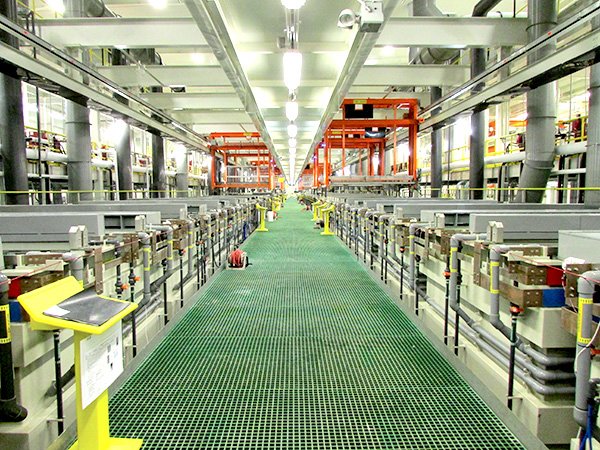
What Is an Auto Plating and Passivation Line?
In short:
An Auto Plating & Passivation Line is an automated industrial system used to apply protective metal coatings and chemical passivation on components. It improves corrosion resistance, surface quality, and durability. These systems use controlled processes like electroplating and chemical treatment, ensuring consistent coating thickness, reduced manual errors, and higher production efficiency for industries such as automotive, aerospace, and manufacturing.
Introduction
In modern Indian manufacturing, product quality and durability are critical. Components used in industries like automotive, aerospace, and fasteners must resist corrosion, wear, and environmental damage. Manual surface treatment methods often lead to inconsistent coating, defects, and higher rejection rates.
This is where an Auto Plating & Passivation Line becomes essential. It solves key industrial challenges such as uneven coating, process inefficiency, and lack of quality control. With increasing demand for automation and compliance with global standards, manufacturers are shifting toward automated plating solutions.
These systems not only improve finish quality but also reduce human dependency, ensure repeatability, and meet strict industry specifications. For Indian manufacturers aiming to compete globally, automation in surface treatment is no longer optional—it is a necessity.
What Is an Auto Plating & Passivation Line?
An Auto Plating & Passivation Line is a fully or semi-automated system used for surface finishing of metal components. It combines two important processes:
- Plating (Electroplating): A thin metal layer is deposited on a component using electrical current.
- Passivation: A chemical process that enhances corrosion resistance by forming a protective oxide layer.
In an automated setup, components move through different treatment tanks using conveyors, hoists, or robotic systems. Each stage is controlled by PLC (Programmable Logic Controller), ensuring precise timing, temperature, and chemical concentration.
This system is widely used in industries where surface quality and corrosion resistance are critical.
How the System Works (Step-by-Step)
An Auto plating plant follows a structured and controlled process. Here is a simplified step-by-step workflow:
1. Loading
Components are loaded onto racks, barrels, or fixtures depending on size and shape.
2. Pre-cleaning
Parts go through cleaning stages such as degreasing and rinsing to remove oil, dust, and contaminants.
3. Surface Activation
Acid treatment prepares the surface for better adhesion of the coating.
4. Electroplating
Components are immersed in plating tanks where metal ions deposit on the surface using electrical current.
5. Rinsing
Multiple rinsing stages remove excess chemicals and ensure purity.
6. Passivation
A chemical treatment creates a protective layer to improve corrosion resistance.
7. Drying
Hot air or centrifugal dryers remove moisture from components.
8. Unloading & Inspection
Finished parts are removed and checked for coating quality and thickness.
Automation ensures each step is consistent, reducing variability and improving final output quality.
Let’s Build the Right Solution Together
Whether you’re exploring ideas or planning a project, our team is here to listen, guide, and deliver solutions that fit your exact requirements.
Benefits & Performance Advantages
Using an Auto plating machine offers several advantages for industrial manufacturers:
- Improved coating quality with uniform thickness
- High corrosion resistance for longer product life
- Consistent process control through automation
- Reduced manual errors and labor dependency
- Higher productivity and faster cycle times
- Better chemical usage and reduced waste
- Compliance with industry standards and regulations
- Long-term cost efficiency through reduced rework and rejection
These benefits make automated systems a smart investment for large-scale production environments.
Practical Industrial Applications
An Auto Plating & Passivation Line is widely used across multiple industries. Its flexibility allows it to handle different component types and materials.
Automotive Industry
Used for coating fasteners, engine parts, and structural components. Learn more about applications in automotive manufacturing here:
automotive surface treatment solutions
Aerospace Industry
Ensures high precision and corrosion resistance for critical components exposed to extreme environments:
aerospace surface treatment systems
Medical Industry
Used for surgical instruments and implants where hygiene and durability are critical:
medical surface treatment applications
Fasteners Industry
Essential for bolts, nuts, and screws to prevent rust and ensure long life:
fasteners surface treatment systems
Household & Consumer Products
Applied in items like fittings, appliances, and decorative hardware:
household product finishing solutions
General Manufacturing
Used in fabrication units, heavy engineering, and industrial equipment production.
Manufacturers can explore a wide range of systems here:
surface treatment product solutions
Expert Insight: Suntech Energreen Perspective
From an engineering standpoint, the effectiveness of an Auto Plating & Passivation Line depends on system design, process control, and customization.
Suntech Energreen focuses on delivering:
- Custom-engineered surface treatment plants based on client requirements
- Fully automated and PLC-controlled systems for precision
- Integration of material handling systems like hoists and conveyors
- Optimized chemical processes for efficiency and sustainability
- End-to-end support including design, manufacturing, installation, and commissioning
Their experience across industries enables them to understand specific challenges and deliver tailored solutions. Proven project execution can be explored here:
project references and case studies
Conclusion
An Auto Plating & Passivation Line plays a critical role in modern manufacturing by ensuring high-quality surface finishing, corrosion resistance, and process efficiency. As industries move toward automation, these systems help manufacturers achieve consistency, reduce costs, and meet global standards.
For Indian industries aiming to improve product durability and production efficiency, investing in automated surface treatment solutions is a strategic step forward.
To learn more or discuss your project requirements,
contact Suntech Energreen for expert consultation
and explore advanced surface treatment solutions designed for your industry.
Frequently Asked Questions (FAQ)
1. How does an Auto plating plant improve quality?
Automation ensures precise control over time, temperature, and chemical composition. This results in uniform coating thickness and fewer defects compared to manual processes.
2. Why is passivation important after plating?
Passivation enhances corrosion resistance by forming a protective layer. It increases the lifespan of components, especially in harsh environments.
3. Which industries benefit most from Auto plating machines?
Industries like automotive, aerospace, medical devices, and fasteners benefit the most due to their need for durability and high-quality surface finishing.
4. Is automation necessary for surface treatment?
Yes, automation improves consistency, reduces errors, and increases production speed, making it essential for modern manufacturing.
5. Can these systems be customized?
Yes, systems can be designed based on component size, production volume, and specific coating requirements.
Let’s Talk About Your Needs
Let’s talk about what you’re looking for. Share your requirements with us, and our team will guide you with the right solutions and clear answers.