
Plating and Passivation Process Explained Simply
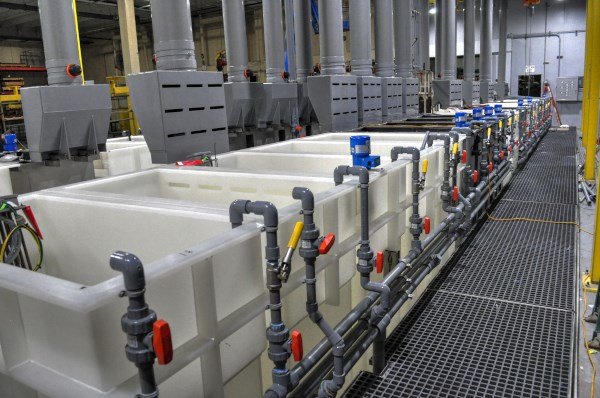
Plating and Passivation Process Explained Simply
In short:
Plating and passivation are surface treatment processes that protect metal parts from corrosion and improve durability. In robotic hot dip galvanizing and automated plating lines, these processes are controlled precisely to ensure uniform coating and long-lasting performance. Automation improves consistency, reduces defects, and helps industries meet quality standards in modern manufacturing.
Introduction
In Indian manufacturing, metal parts are exposed to harsh conditions such as moisture, chemicals, and temperature changes. Without proper protection, these parts can rust, weaken, and fail early. This creates quality issues, higher maintenance costs, and customer dissatisfaction.
Plating and passivation play a key role in solving these problems. These processes protect metal surfaces and extend product life. However, manual processes often lead to uneven coating and inconsistent results.
This is why industries are adopting automated systems and robotic hot dip galvanizing. Automation ensures controlled processes, uniform coating, and compliance with global standards. It also helps manufacturers improve efficiency while maintaining consistent product quality.
What is Plating and Passivation in Surface Treatment?
Plating is a process where a thin layer of metal is deposited onto a base material. Common plating types include zinc, nickel, and chrome plating. This layer protects the metal from corrosion and improves appearance.
Passivation is a chemical treatment applied after plating. It creates a protective film on the surface, enhancing corrosion resistance and durability.
In robotic hot dip galvanizing, components are dipped in molten zinc to form a strong protective coating. After this, passivation may be applied to prevent oxidation and increase life span.
Automated systems ensure that both plating and passivation are done under controlled conditions. This improves coating quality and consistency.
Manufacturers can explore advanced automated systems through Suntech Energreen’s surface treatment solutions, designed for high-performance industrial applications.
How the System Works (Step-by-Step)
Plating and passivation processes follow a structured sequence in automated systems.
1. Component Loading
Parts are loaded onto racks or barrels. Proper alignment ensures even coating.
2. Degreasing
Oil and dirt are removed using chemical cleaning solutions.
3. Pickling
Acid treatment removes rust and oxide layers from the surface.
4. Rinsing
Multiple rinsing stages remove chemical residues.
5. Plating Process
Metal coating is applied through electroplating or robotic hot dip galvanizing.
Automation controls current, temperature, and immersion time.
6. Passivation Treatment
A chemical layer is applied to enhance corrosion resistance and prevent oxidation.
7. Drying and Finishing
Parts are dried and prepared for inspection or dispatch.
8. Inspection
Automated systems check coating thickness and surface quality.
Each stage is controlled using PLC-based automation, ensuring repeatability and minimal variation.
Let’s Build the Right Solution Together
Whether you’re exploring ideas or planning a project, our team is here to listen, guide, and deliver solutions that fit your exact requirements.
Benefits & Performance Advantages
Plating and passivation with automated systems offer several advantages:
- Improved coating quality with uniform surface finish
- Enhanced corrosion resistance for longer product life
- Consistent coating thickness across all components
- Reduced manual errors and process variations
- Higher productivity with faster processing cycles
- Better compliance with industry standards
- Lower rejection rates and reduced rework
- Long-term cost efficiency through optimized operations
These benefits make robotic hot dip galvanizing and automated plating systems essential for modern industries.
Practical Industrial Applications
Plating and passivation are widely used across multiple industries.
Automotive Industry
Used for coating components such as fasteners, brackets, and engine parts.
Learn more about automotive surface treatment systems.
Aerospace Industry
Requires high precision and defect-free coatings for safety-critical parts.
Explore aerospace surface treatment applications.
Medical Devices
Ensures corrosion-resistant and hygienic surfaces for surgical tools.
Refer to medical surface treatment solutions.
Fasteners Industry
High-volume production needs consistent coating thickness and durability.
See fasteners surface treatment systems.
Household & Consumer Products
Improves product appearance and increases life span.
Check household product applications.
General Manufacturing
Used in electrical, construction, and engineering components for protection and performance.
Expert Insight: Suntech Energreen Perspective
Suntech Energreen designs and delivers advanced plating and passivation systems tailored for Indian industries.
Their approach includes:
- Custom-engineered surface treatment plants based on application needs
- Fully automated and PLC-controlled systems for precise process control
- Integration of robotic hot dip galvanizing for improved efficiency
- End-to-end support from design to installation
- Proven experience across automotive, aerospace, and general industries
Manufacturers can review real-world implementations through Suntech Energreen’s project references to understand system performance and reliability.
These solutions help industries achieve consistent quality while meeting global standards.
Conclusion
Plating and passivation are critical processes in modern manufacturing. They protect metal components, improve durability, and ensure consistent performance. With the adoption of robotic hot dip galvanizing and automated systems, industries can achieve higher quality and efficiency.
Automation reduces errors, ensures uniform coating, and supports large-scale production. For manufacturers aiming to meet global standards, investing in advanced surface treatment systems is a smart decision.
To upgrade your surface treatment process, explore Suntech Energreen’s solutions or contact Suntech Energreen for project consultation.
Frequently Asked Questions (FAQ)
1. What is the purpose of passivation after plating?
Passivation adds a protective chemical layer on the metal surface. It improves corrosion resistance and prevents oxidation, increasing product life.
2. How does robotic hot dip galvanizing improve plating quality?
It ensures precise control of dipping time, temperature, and movement. This results in uniform coating and fewer defects.
3. Is plating alone enough for corrosion protection?
Plating provides basic protection, but passivation enhances it further. Together, they offer better durability and performance.
4. Which industries use plating and passivation the most?
Industries like automotive, aerospace, fasteners, and medical devices rely heavily on these processes for quality and durability.
5. Can automated systems handle different component sizes?
Yes. Automated plating lines can be customized to handle various shapes, sizes, and production volumes.
Let’s Talk About Your Needs
Let’s talk about what you’re looking for. Share your requirements with us, and our team will guide you with the right solutions and clear answers.