
Future Trends in Robotic Galvanizing Plants in India
Future Trends in Robotic Galvanizing Plants in India
In short:
Robotic Hot Dip Galvanizing is transforming how Indian industries protect metal from corrosion. It uses automated systems and robots to improve coating quality, reduce errors, and increase production speed. Future trends include smart automation, data-driven control, and energy-efficient systems. These advancements help manufacturers achieve consistent results, meet global standards, and reduce long-term costs.
Introduction
Corrosion is a major challenge in Indian manufacturing. Steel components used in infrastructure, automotive, and industrial applications face harsh weather, humidity, and chemical exposure. Without proper protection, they fail early, leading to high maintenance costs and safety risks.
Traditional galvanizing methods rely heavily on manual handling. This often leads to uneven coating, quality variation, and safety concerns. As industries scale and demand higher precision, automation becomes necessary.
Robotic Hot Dip Galvanizing is emerging as a reliable solution. It improves consistency, reduces human error, and ensures better control over the entire process. With India focusing on infrastructure growth and export-quality manufacturing, robotic galvanizing plants are becoming a key investment for forward-looking industries.
What Is Robotic Hot Dip Galvanizing?
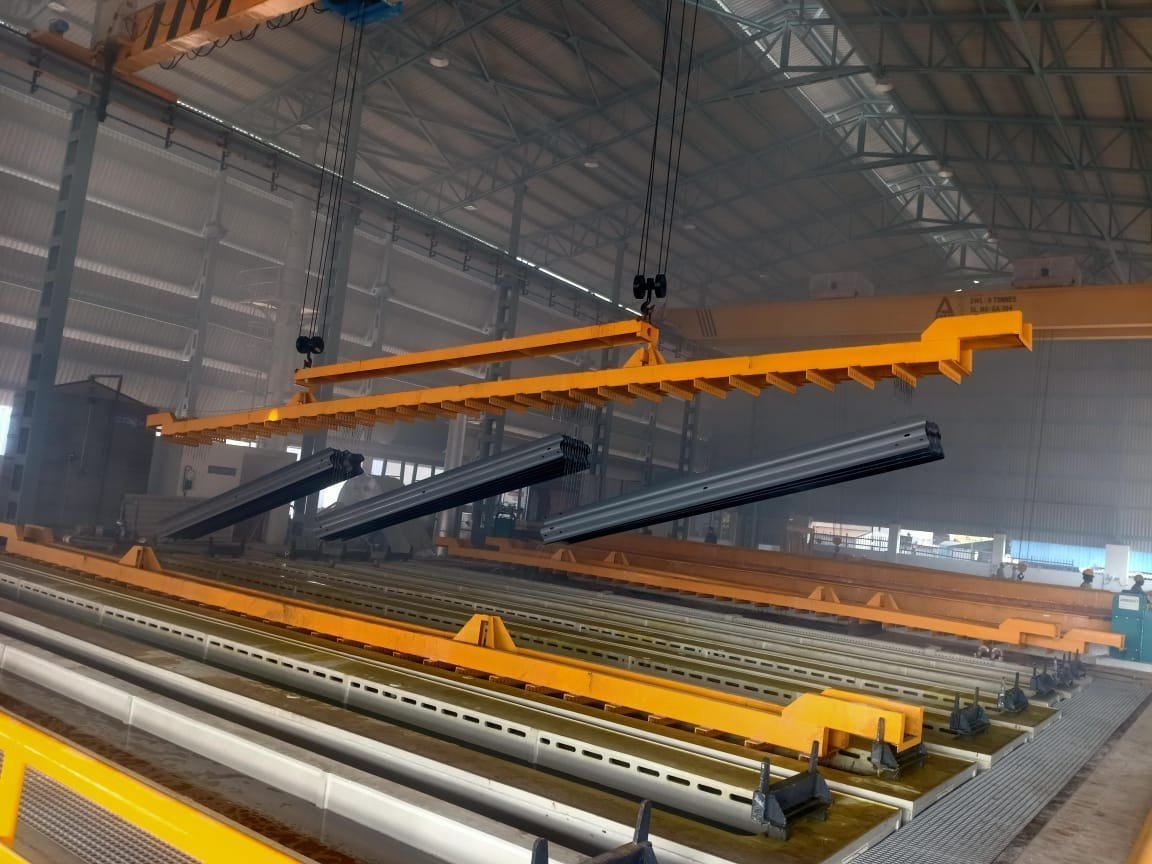
Robotic Hot Dip Galvanizing is an advanced surface treatment process where steel components are coated with zinc using automated and robotic systems.
In this process, robots handle material movement, dipping, and withdrawal from molten zinc baths. Sensors and PLC systems monitor temperature, immersion time, and coating thickness.
Compared to conventional galvanizing, robotic systems provide:
- Better precision
- Controlled process conditions
- Repeatable results
- Improved safety
The integration of robotics ensures that every component gets uniform coating, regardless of size or complexity.
How the System Works (Step-by-Step)
A robotic galvanizing plant follows a structured and automated workflow:
1. Pre-treatment Cleaning
Components are cleaned using degreasing and pickling to remove oil, rust, and scale.
2. Fluxing
A flux solution is applied to prepare the surface for proper zinc bonding.
3. Robotic Handling
Robots pick and position the components accurately for dipping.
4. Hot Dip Galvanizing
The material is immersed in molten zinc at controlled temperature.
5. Controlled Withdrawal
Robots remove the component at a precise speed to ensure uniform coating thickness.
6. Cooling and Inspection
The coated material is cooled and checked for quality consistency.
7. Final Handling
Finished components are transferred automatically for storage or further processing.
Automation ensures each step is monitored and controlled, reducing variation and improving output quality.
Let’s Build the Right Solution Together
Whether you’re exploring ideas or planning a project, our team is here to listen, guide, and deliver solutions that fit your exact requirements.
Benefits & Performance Advantages
Robotic Hot Dip Galvanizing offers several operational and quality benefits:
- Improved coating uniformity across all components
- Higher corrosion resistance and longer product life
- Reduced manual handling and operator risk
- Consistent coating thickness with minimal variation
- Increased production speed and throughput
- Lower rejection rates and rework costs
- Better compliance with international quality standards
- Energy-efficient operations with optimized resource use
These advantages make robotic systems ideal for high-volume and precision-driven industries.
Practical Industrial Applications
Robotic galvanizing plants are widely used across industries that require durable and corrosion-resistant components.
Automotive Industry
Used for chassis parts, brackets, and structural components. Automation ensures consistent coating for mass production. Learn more about applications in automotive surface treatment on Automotive Surface Treatment Solutions.
Aerospace Industry
Critical components require precise coating and strict quality control. Robotic systems help meet these standards. Explore more at Aerospace Surface Treatment Solutions.
Medical Equipment
Medical-grade components require clean and controlled processing environments. Automation reduces contamination risks. See details at Medical Surface Treatment Solutions.
Medical Equipment
Medical-grade components require clean and controlled processing environments. Automation reduces contamination risks. See details at Medical Surface Treatment Solutions.
Fasteners Industry
Bolts, nuts, and screws need uniform coating for durability. Robotic systems improve batch consistency. Visit Fasteners Surface Treatment Solutions.
Household & Consumer Products
Appliances and metal furniture benefit from corrosion protection and long-lasting finishes. Learn more at Household Surface Treatment Solutions.
General Manufacturing
Used in infrastructure, construction, and heavy engineering for structural steel protection.
For a broader look at available systems, explore Surface Treatment Products.
Expert Insight: Suntech Energreen Perspective
Suntech Energreen has observed a clear shift in the Indian market toward automation in surface treatment systems. Manufacturers are no longer focused only on output—they want consistency, traceability, and compliance.
Robotic Hot Dip Galvanizing plants are being designed with:
- PLC-based automation for precise control
- Custom configurations based on component size and volume
- Integrated material handling systems
- Energy-efficient furnace and bath systems
- Data monitoring for process optimization
The company’s experience across industries allows it to design solutions that match real production needs. From system design to installation and commissioning, the focus is on long-term performance and reliability.
You can review completed projects and case studies on Project References.
Future Trends in Robotic Galvanizing Plants in India
The future of Robotic Hot Dip Galvanizing is driven by technology and sustainability:
1. Smart Automation & Industry 4.0
Integration with IoT systems allows real-time monitoring and predictive maintenance.
2. AI-Based Process Optimization
Advanced systems can adjust parameters automatically for better coating results.
3. Energy-Efficient Operations
New designs focus on reducing heat loss and improving energy usage.
4. Environment Compliance
Stricter regulations are pushing industries toward cleaner and safer processes.
5. Flexible Plant Design
Modern plants can handle different product sizes and batch requirements with minimal changeover.
These trends are helping Indian manufacturers compete globally with better quality and efficiency.
Conclusion
Robotic Hot Dip Galvanizing is becoming a key technology in modern manufacturing. It solves major challenges like inconsistent coating, high labor dependency, and safety risks. With automation, industries can achieve better quality, higher productivity, and long-term cost savings.
As India moves toward advanced manufacturing and global competitiveness, investing in robotic galvanizing plants is a strategic decision. It not only improves product life but also ensures compliance with international standards.
Manufacturers looking to upgrade their surface treatment systems can benefit from customized and automated solutions.
Explore advanced systems or get expert guidance by visiting Contact Suntech Energreen.
Frequently Asked Questions (FAQ)
1. What is the main advantage of robotic hot dip galvanizing?
It provides consistent coating quality by reducing human error. Automation ensures uniform thickness and better corrosion protection.
2. Is robotic galvanizing suitable for small components?
Yes. It is highly effective for small and complex parts like fasteners, where uniform coating is critical.
3. How does automation improve safety in galvanizing plants?
Robots handle high-temperature processes, reducing direct human exposure to molten zinc and hazardous chemicals.
4. Which industries benefit most from robotic galvanizing?
Automotive, aerospace, construction, fasteners, and general manufacturing industries benefit significantly.
5. Does robotic galvanizing reduce operational costs?
Yes. It reduces rework, improves efficiency, and lowers long-term maintenance costs.
Let’s Talk About Your Needs
Let’s talk about what you’re looking for. Share your requirements with us, and our team will guide you with the right solutions and clear answers.