Auto Plating Line vs Semi-Automatic Line: Key Differences
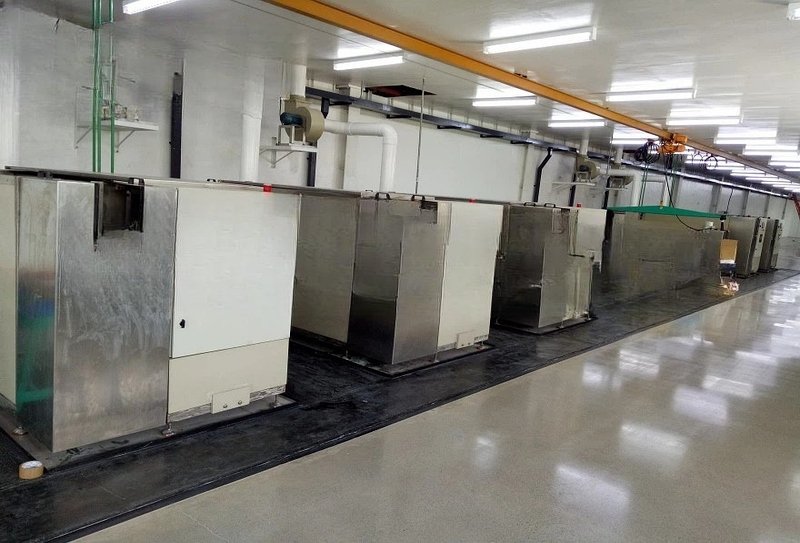
Auto Plating Line vs Semi-Automatic Line: Key Differences
In short:
Auto plating lines offer full automation with precise control, delivering consistent coating quality and higher productivity. Semi-automatic lines require manual handling at certain stages, which can lead to variation in results. In robotic hot dip galvanizing and plating systems, fully automated lines provide better process control, reduced errors, and long-term efficiency, making them ideal for modern industrial manufacturing.
Introduction
In India’s manufacturing industry, surface treatment quality directly affects product durability and performance. Many industries still use semi-automatic plating lines, which depend on manual handling. This often leads to uneven coating, inconsistent quality, and higher rejection rates.
As industries aim to meet global standards, automation has become essential. Robotic hot dip galvanizing and auto plating lines are now widely adopted to improve consistency and efficiency.
Choosing between an auto plating line and a semi-automatic line is a critical decision for manufacturers. It impacts production speed, quality control, and long-term costs.
Understanding the key differences helps engineers and decision-makers select the right system for their operational needs.
What is an Auto Plating Line vs Semi-Automatic Line?
An auto plating line is a fully automated system where all stages—loading, cleaning, plating, passivation, and unloading—are controlled by machines and PLC systems. It ensures minimal human intervention and high precision.
A semi-automatic plating line combines manual and automated operations. Operators handle material movement or certain process steps, while some stages are mechanized.
In robotic hot dip galvanizing, auto systems control dipping time, speed, and positioning automatically. In semi-automatic systems, operators may control these factors manually, leading to variation.
Manufacturers can explore advanced automation solutions through Suntech Energreen’s surface treatment systems, designed for precision and scalability.
How the System Works (Step-by-Step)
Both systems follow similar process stages, but the level of automation differs.
1. Loading
- Auto Line: Automated loading systems ensure correct positioning
- Semi-Automatic: Manual loading by operators
2. Pre-Treatment
- Auto Line: Controlled chemical dosing and timing
- Semi-Automatic: Operator-dependent handling
3. Pickling and Cleaning
- Auto Line: Sensors and timers maintain consistency
- Semi-Automatic: Manual monitoring required
4. Plating / Galvanizing
- Auto Line: Robotic hot dip galvanizing ensures precise immersion
- Semi-Automatic: Operator controls dipping and timing
5. Passivation
- Auto Line: Automated chemical control
- Semi-Automatic: Manual process adjustments
6. Drying
- Auto Line: Automated drying systems
- Semi-Automatic: Partial automation or manual handling
7. Inspection
- Auto Line: Automated quality checks
- Semi-Automatic: Visual inspection by operators
Automation ensures repeatability, while manual steps introduce variability.
Let’s Build the Right Solution Together
Whether you’re exploring ideas or planning a project, our team is here to listen, guide, and deliver solutions that fit your exact requirements.
Benefits & Performance Advantages
Auto plating lines offer significant advantages over semi-automatic systems:
- Superior coating quality with uniform thickness
- Better corrosion resistance due to controlled processes
- Consistent production output with minimal variation
- Reduced manual errors and operator dependency
- Higher productivity with faster cycle times
- Lower rejection rates and improved quality control
- Efficient resource usage (chemicals, energy, water)
- Long-term cost savings despite higher initial investment
Semi-automatic lines may have lower initial costs but often result in higher operational inefficiencies.
Practical Industrial Applications
Both auto and semi-automatic lines are used across industries, but automation is preferred for high precision.
Automotive Industry
Auto plating lines are used for consistent coating of high-volume components.
Learn more about automotive surface treatment systems.
Aerospace Industry
Requires defect-free coatings, making automation essential.
Explore aerospace applications.
Medical Devices
Automation ensures hygiene and precision in coating processes.
Refer to medical surface treatment.
Fasteners Industry
High-volume production benefits from automated consistency.
See fasteners treatment systems.
Household & Consumer Products
Automation improves finish quality and durability.
Check household applications.
General Manufacturing
Used in construction, electrical, and engineering components for long-term protection.
Expert Insight: Suntech Energreen Perspective
Suntech Energreen provides both auto and semi-automatic plating solutions based on industry requirements. However, the focus is on advanced automation for better performance.
Their expertise includes:
- Custom-designed surface treatment plants
- Fully automated and PLC-controlled systems
- Integration of robotic hot dip galvanizing for precise coating
- End-to-end support from design to installation
- Strong experience across multiple industries
Manufacturers can review successful implementations through Suntech Energreen’s project references, showcasing real-world results.
These systems are designed to deliver consistent quality while improving operational efficiency.
Conclusion
Choosing between an auto plating line and a semi-automatic line depends on production needs, quality requirements, and long-term goals. While semi-automatic systems may suit smaller operations, automated systems provide clear advantages in consistency, efficiency, and scalability.
With robotic hot dip galvanizing and advanced automation, manufacturers can achieve uniform coating, reduce errors, and meet global standards.
For industries aiming to improve quality and productivity, automation is the future of surface treatment.
To implement advanced solutions, explore Suntech Energreen’s offerings or contact Suntech Energreen for project consultation.
Frequently Asked Questions (FAQ)
1. What is the main difference between auto and semi-automatic plating lines?
Auto plating lines are fully automated with minimal human intervention, while semi-automatic lines require manual handling at certain stages.
2. Which system offers better coating quality?
Auto plating lines provide better quality due to precise control over process parameters.
3. Are semi-automatic lines still useful?
Yes. They are suitable for small-scale operations or lower production volumes.
4. Is robotic hot dip galvanizing possible in semi-automatic lines?
It is limited. Robotic systems are mainly used in fully automated setups for better control.
5. Which system is more cost-effective in the long term?
Auto plating lines are more cost-effective due to lower rejection rates and higher efficiency.
Let’s Talk About Your Needs
Let’s talk about what you’re looking for. Share your requirements with us, and our team will guide you with the right solutions and clear answers.