Why Surface Finishing Matters in Medical Device Manufacturing
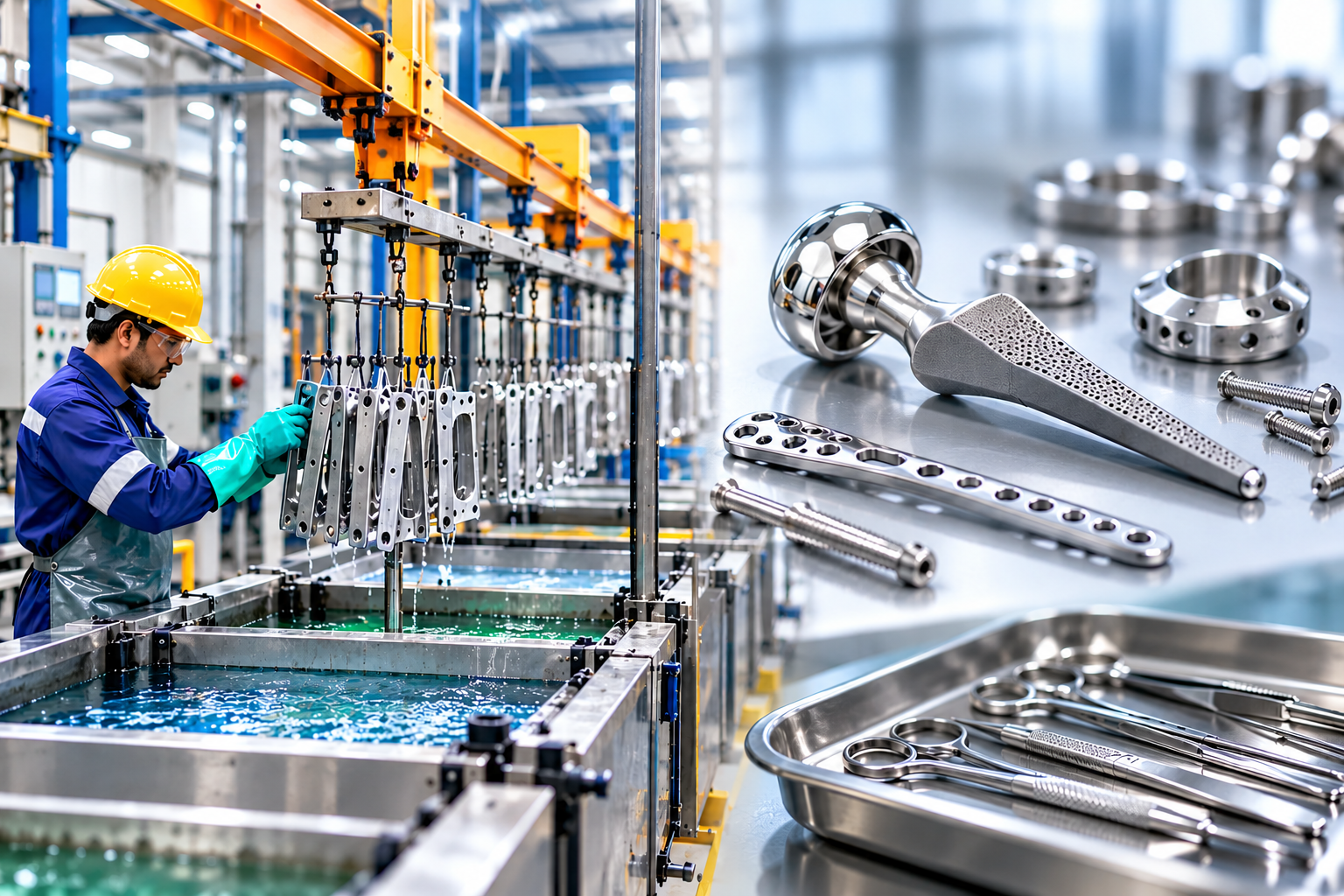
Why Surface Finishing Matters in Medical Device Manufacturing
In short:
Surface finishing decides how a medical device performs inside the body and inside a sterilizer. Processes like electropolishing, passivation, and precision polishing remove defects, reduce bacterial hold points, and protect against corrosion. That means safer devices and fewer rejected batches. Suntech Energreen builds medical polishing and surface treatment plants that help manufacturers in India deliver consistent, hygienic, medical-grade finishes at scale.
Introduction
A scalpel, a bone screw, and an orthopedic implant may look clean to the eye. Under magnification, the story changes. Tiny burrs, micro-scratches, and rough peaks can trap bacteria, start corrosion, or irritate tissue. Regulators and hospitals do not accept that risk.
For medical device makers in India, a strong finishing line is now a basic requirement, not an upgrade. Export buyers also check surface quality closely. This blog explains why surface finishing matters, how the process works, and what to look for in your equipment. Suntech Energreen designs surface treatment plants for precision metal components, so we see these challenges on real shop floors.
What Is Surface Finishing in Medical Device Manufacturing?
Surface finishing is the final set of treatments applied to a metal component after machining or forming. It improves how the surface looks, feels, and behaves.
In medical manufacturing, finishing goes beyond appearance. It controls surface roughness, removes microscopic burrs, and builds a clean, corrosion-resistant layer. Common methods include mechanical polishing, electropolishing, and passivation.
These methods suit stainless steel instruments, orthopedic implants, dental tools, and hospital equipment. Each part needs a finish that matches its use, whether it touches tissue, bone, or only a surgeon’s hand.
How the Surface Finishing Process Works
- Incoming Inspection and Cleaning - Check each component for defects, oil, and machining residue. Clean it with a controlled degreasing process. Contamination at this stage ruins every step that follows.
- Burr Removal and Deburring — Remove sharp edges and burrs left by cutting or drilling. Burr removal in medical components prevents tissue damage and stops particles from breaking loose during use.
- Mechanical Polishing — Use abrasives and buffing systems to level the surface and reach the target roughness. Precision polishing systems give repeatable results across large batches.
- Electropolishing — Place the part in an electrolytic bath. The process dissolves a thin surface layer and smooths microscopic peaks. This is the standard route for electropolishing medical devices made from stainless steel.
- Passivation — Treat the part in an acid solution to remove free iron and strengthen the natural chromium oxide layer. Passivation of medical instruments improves corrosion resistance during repeated sterilization.
- Final Cleaning, Rinsing, and Quality Control - Rinse with high-purity water and dry the parts. Then measure surface roughness and inspect for defects. Document the results for traceability.
Let’s Build the Right Solution Together
Whether you’re exploring ideas or planning a project, our team is here to listen, guide, and deliver solutions that fit your exact requirements.
Key Benefits of Medical-Grade Surface Finishing
Better Corrosion Resistance — Passivated and electropolished surfaces resist rust and pitting, even after hundreds of sterilization cycles.
Hygienic Surfaces — A smooth finish leaves fewer places for bacteria and biofilm to hold on. Cleaning becomes faster and more reliable.
Biocompatible Performance — Clean, defect-free metal surfaces reduce the risk of tissue irritation and support biocompatible surface finishing standards.
Controlled Surface Roughness — Defined roughness values help implants and instruments perform as designed.
Longer Device Life — Removing stress points and burrs reduces wear, cracking, and early failure.
Higher Batch Acceptance — Stable finishing cuts rework and rejection, which protects your margins and delivery schedules.
Our Surface Treatment Solutions for Medical Components
Suntech Energreen supplies plant solutions for manufacturers who need consistent medical finishing:
Medical Polishing Lining Plant — Complete plants for polishing, lining, and finishing medical-grade metal components.
Medical Surface Treatment in India — Surface treatment systems for cleaning, electropolishing, and passivation of surgical and healthcare parts.
Each plant is planned around your component size, material, and daily output.
Why Location Matters for Medical Surface Finishing Equipment
India’s medical device sector is growing fast. Manufacturers across Tamil Nadu and other industrial states now supply both domestic hospitals and export markets. That growth raises the bar for finishing quality.
A local equipment partner understands Indian power conditions, water quality, and shop-floor realities. These factors affect bath stability and finishing results.
Local support also means faster commissioning and quicker spare parts. When a line stops, your production schedule suffers. A nearby technical team reduces that downtime.
Choosing an Indian manufacturer for industrial surface finishing solutions also keeps costs predictable and communication simple.
Why Choose Suntech Energreen
Plant Manufacturing Focus — We build surface treatment plants, so our engineering knowledge goes deep.
Custom Engineering — We design each line around your parts, materials, and output targets.
Precision Process Control — Our systems support repeatable results across every batch.
Stainless Steel Expertise — Our plants suit stainless steel treatment, including polishing and passivation.
Practical Support — From planning to installation, we guide your team at each stage.
Built for Indian Industry — Our equipment suits local operating conditions and growing production demands.
Learn more about Suntech Energreen and our approach. Ready to upgrade your finishing line? Contact our team for a technical discussion.
Conclusion
Surface finishing in medical device manufacturing protects patients, supports sterilization, and extends device life. Burr removal, polishing, electropolishing, and passivation each play a clear role. Together, they turn a machined part into a safe, medical-grade component.
The right equipment makes these results repeatable. Suntech Energreen helps manufacturers build reliable finishing lines through our medical polishing lining plant solutions. Contact Suntech Energreen today to discuss your components, your output goals, and the finishing plant that fits your production.
Frequently Asked Questions (FAQ)
Why is surface finishing important in medical device manufacturing?
It removes burrs, controls roughness, and improves corrosion resistance. These factors affect patient safety, sterilization success, and device life. Poor finishing can lead to infection risk and device failure.
What is the difference between electropolishing and passivation?
Electropolishing dissolves a thin surface layer to smooth the metal. Passivation removes free iron and strengthens the protective oxide layer. Many medical stainless steel parts receive both treatments.
Which metals need medical-grade surface finishing?
Stainless steel is the most common, especially for instruments and hospital equipment. Titanium and cobalt-chromium alloys also need controlled finishing for implants. The process depends on the material and end use.
How does surface roughness affect a medical device?
Rough surfaces can trap bacteria and make cleaning harder. They can also speed up wear and corrosion. Smooth, controlled surfaces perform better and last longer.
Where can I find surface treatment equipment for medical devices in India?
You can work with a plant manufacturer that designs custom polishing and surface treatment lines. Suntech Energreen supplies medical polishing and surface treatment plants for manufacturers across India.
Let’s Talk About Your Needs
Let’s talk about what you’re looking for. Share your requirements with us, and our team will guide you with the right solutions and clear answers.