
How to Set Up a Hot Dip Galvanizing Plant — Step-by-Step Process Explained
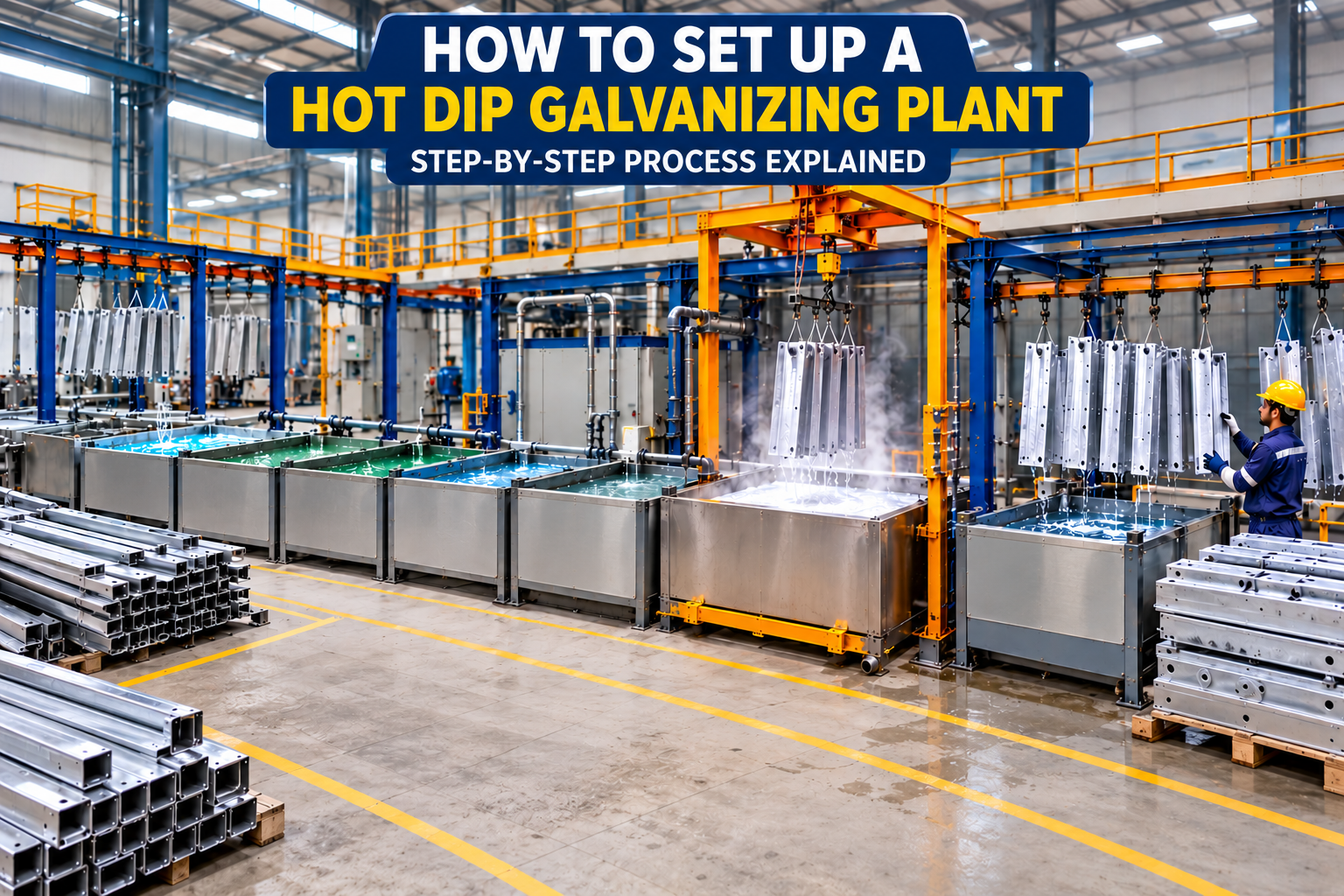
How to Set Up a Hot Dip Galvanizing Plant — Step-by-Step Process Explained
In short:
Setting up a hot dip galvanizing plant takes eight stages. You define capacity, finalise the layout, prepare the site, install pretreatment tanks, fit the drying oven and zinc kettle, add handling and fume systems, and commission the line. Suntech Energreen designs and supplies complete galvanizing plants in India, so you get one partner from design to startup.
Introduction
Corrosion shortens steel life and drives up maintenance bills. Fabricators, tower makers, and structural steel units all need a reliable coating partner. Many of them now build their own galvanizing line instead of outsourcing. That choice saves transport time and gives full quality control. But a poor setup leads to uneven coating, zinc waste, and safety risks.
This guide explains each stage of a hot dip galvanizing plant setup in plain language. You will learn what equipment you need, how the layout works, and which compliance rules apply. Suntech Energreen builds industrial surface treatment plants for customers across India, including the fabrication clusters around Vellore and Chennai.
What Is a Hot Dip Galvanizing Plant?
A hot dip galvanizing plant is an industrial line that coats steel by dipping it into molten zinc. The zinc bonds with the steel surface and forms a tough, layered coating. This coating gives long-term steel corrosion protection.
The hot dip galvanizing process follows a fixed order: degreasing, pickling, rinsing, fluxing, drying, galvanizing, and quenching. Each stage needs dedicated equipment. A zinc coating plant also needs material handling, fume extraction, and safety systems.
Plant setup means selecting this equipment, arranging it in the right order, and running it safely. A good steel galvanizing plant matches your job size, daily output, and budget.
Step-by-Step Process to Set Up a Hot Dip Galvanizing Plant
- Define Capacity and Job Size - List your product types, maximum length, weight, and daily tonnage. These numbers decide kettle size and crane capacity. Under-sizing the kettle is the costliest mistake in galvanizing plant design.
- Finalise Plant Layout and Design — Arrange tanks in process order for smooth flow. Leave room for crane travel, drainage, and storage. A well-planned galvanizing plant layout cuts handling time and running cost.
- Prepare the Site and Utilities — Build a strong foundation, acid-resistant flooring, and proper drainage. Arrange power, water, and fuel supply. Add an effluent collection pit before galvanizing plant installation begins.
- Install Pretreatment Tanks — Fit degreasing, pickling, and rinse tanks. Pickling tanks usually hold hydrochloric acid. Use acid-resistant lining and good ventilation to protect workers and equipment.
- Set Up the Fluxing Tank and Drying Oven — The fluxing tank applies a protective layer that prevents oxidation before dipping. The drying oven then removes all moisture. Wet steel splashes in molten zinc, so this stage is vital for galvanizing plant safety.
- Inspect and repeat - Check thickness and appearance, then record the results. A second coat can follow if your specification needs it.
- Install the Galvanizing Kettle and Zinc Bath - Place the galvanizing kettle on a furnace with even heat control. The zinc bath runs at about 450°C. Accurate temperature control gives uniform coating and extends kettle life.
- Add Material Handling and Fume Extraction - Install overhead cranes, hoists, and jigs for safe lifting. Fit a fume extraction system over the kettle and pickling area. This keeps air clean and supports environmental compliance.
- Commission, Test, and Train - Run trial batches and check coating thickness, adhesion, and finish. Calibrate controls and train operators on safe practice. Careful galvanizing plant commissioning ensures a smooth startup.
Let’s Build the Right Solution Together
Whether you’re exploring ideas or planning a project, our team is here to listen, guide, and deliver solutions that fit your exact requirements.
Key Benefits of Setting Up Your Own Galvanizing Plant
Lower Per-Tonne Coating Cost — In-house galvanizing removes outsourcing margins on high volumes.
Faster Turnaround — No transport delays. You dispatch coated material on your own schedule.
Full Quality Control — You control coating thickness and finish on every batch.
Long Steel Life — Zinc protects steel from rust for decades, even in outdoor and coastal use.
Consistent Output With Automation — An automated galvanizing plant reduces manual handling and keeps cycle times steady.
New Revenue Stream — You can offer job-work galvanizing to nearby fabricators.
Our Galvanizing Plant Services and Offerings
Hot Dip Galvanizing Plant Manufacturer in India — Plants engineered to your capacity, layout, and site conditions.
Hot Dip Galvanizing Plants — Our plant range with kettles, pretreatment tanks, fluxing units, and drying ovens.
Turnkey Galvanizing Plant Solutions — Design, manufacturing, installation, and commissioning under one roof.
Fume Extraction and Safety Systems — Ventilation and handling systems that support compliance and worker safety.
Why Location Matters for Your Galvanizing Plant
Tamil Nadu has a strong base of steel fabrication, engineering, and auto component units. Vellore and Chennai sit at the centre of this industrial belt. Local demand for galvanized steel is steady, so a plant here finds customers quickly.
A nearby manufacturer also makes your project easier. Site visits are faster. Installation support reaches you sooner. Spare parts arrive without long delays.
Local knowledge helps with rules too. Indian standards such as IS 2629 and IS 4759 guide galvanizing practice. You also need consent from your state pollution control board, which is TNPCB in Tamil Nadu.
Suntech Energreen serves customers across India and plans every plant around these requirements.
Why Choose Suntech Energreen
Strong Engineering Expertise — We specialise in industrial surface treatment equipment, not general fabrication.
Custom Plant Design — Every layout and kettle size matches your product mix and output target.
Quality Galvanizing Plant Machinery — We build tanks, kettles, and ovens for heavy daily use.
End-to-End Support — One team handles design, supply, installation, and commissioning.
Compliance-Ready Planning — We include fume extraction and effluent handling in the design from day one.
Reliable After-Sales Support — Spares and service help keep your line running.
Want to know more about our work? Visit our About Us page. Ready to plan your plant? Contact Us and talk to our team today.
Conclusion
A successful hot dip galvanizing plant setup follows a clear order. Plan capacity, design the layout, prepare the site, install pretreatment and drying equipment, fit the zinc kettle, add fume control, and commission with care. Each stage affects coating quality, safety, and running cost.
Suntech Energreen helps manufacturers build reliable galvanizing lines across India. Explore our hot dip galvanizing plants to find the right fit. You can also read About Us to learn how we work. Ready to start? Contact Us and we will guide you from design to commissioning.
Frequently Asked Questions (FAQ)
How much does a hot dip galvanizing plant cost?
Hot dip galvanizing plant cost depends on kettle size, automation level, pretreatment tanks, and fume control. A small manual plant costs far less than an automated high-capacity line. Share your job size and daily output with Suntech Energreen for an accurate quote.
What equipment is needed for a hot dip galvanizing plant?
You need degreasing, pickling, and rinse tanks, a fluxing tank, a drying oven, a galvanizing kettle, and a quench tank. Cranes, jigs, and a fume extraction system complete the hot dip galvanizing equipment list.
How long does it take to set up a galvanizing plant?
Timelines vary with plant size and site readiness. Design, manufacturing, installation, and commissioning usually take several months. Early site preparation saves the most time.
What temperature does a zinc bath run at?
A galvanizing zinc bath runs at about 445°C to 460°C. Steady temperature control gives a uniform coating and protects the kettle.
Do I need environmental clearance for a galvanizing plant?
Yes. You need consent from your state pollution control board. You also need proper fume extraction and effluent handling. Check local requirements before construction starts.
Let’s Talk About Your Needs
Let’s talk about what you’re looking for. Share your requirements with us, and our team will guide you with the right solutions and clear answers.