
How to Increase Barrel Plating Efficiency in Your Production Line
How to Increase Barrel Plating Efficiency in Your Production Line
In short:
You increase barrel plating efficiency by balancing load size, barrel rotation speed, current density, and bath chemistry. Then you cut idle time with automation and stable maintenance routines. Suntech Energreen designs barrel plating plants and spares that help Indian manufacturers shorten cycle time, control plating thickness, and reduce defects without raising running costs. Small, steady fixes usually beat expensive overhauls.
Introduction
Every plating line has the same problem. Parts wait, baths drift, and rejects pile up. You pay for power, chemicals, and labour, yet output stays flat.
Many plants in India run barrel plating lines for fasteners, clips, and small components. Demand is high and margins are tight. A line that loses even 10 percent of its time costs real money every month. Small gains add up across thousands of barrels a year.
The good news is that most losses are fixable. You do not need a new plant to start. You need clear data on cycle time, load, and bath health.
This guide from Suntech Energreen shows how to increase barrel plating efficiency step by step. It also explains where better equipment makes the biggest difference.
What Is Barrel Plating Efficiency?
Barrel plating efficiency measures how well your line turns inputs into good plated parts. Inputs include time, power, metal salts, and labour. Output is the count of parts that pass thickness and appearance checks.
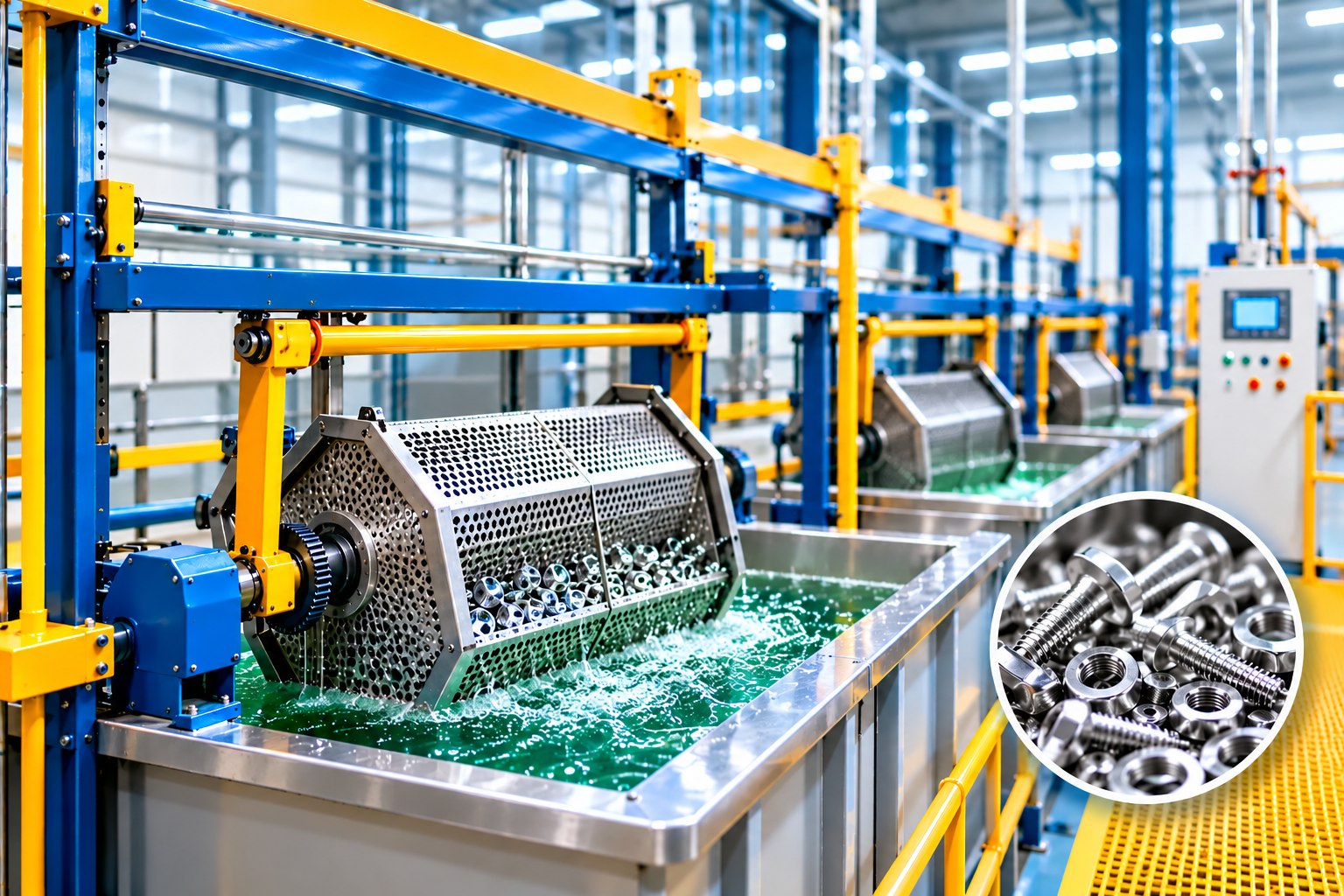
Barrel electroplating suits small parts. Parts tumble inside a rotating barrel while current deposits metal such as zinc, nickel, or copper. This tumbling gives uniform metal coating on bulk loads.
Efficiency rises when cycle time falls, rejects drop, and current efficiency stays high. It falls when loads are wrong, baths are unbalanced, or machines sit idle.
Barrel Plating Process Optimization
- Audit your barrel plating cycle time - Record every stage from loading to unloading. Note waiting, rinsing, and transfer time. Hidden delays often show up here.
- Set the right barrel loading capacity — Overloaded barrels block current and cause uneven coating. Underloaded barrels waste bath time. Fill to the rated level and keep part sizes similar in each batch.
- Tune barrel rotation speed — Slow rotation traps parts and leaves bare spots. Fast rotation damages threads and adds scratches. Match speed to part weight and shape.
- Control current density in barrel plating — Each metal needs its own range. Too high causes burning. Too low slows deposition. Check rectifier output and contacts often.
- Maintain the plating bath — Test pH, temperature, metal content, and additives on a fixed schedule. Good electroplating chemical management prevents pitting, dull finish, and rework.
- Prevent plating defects at the source - Degrease and clean parts properly. Poor pretreatment causes blisters and peeling. Fix it before plating, not after.
- Automate repetitive moves - An automatic barrel plating machine removes manual lifting delays and keeps timing consistent. It also supports plating thickness control and reduces production downtime.
Let’s Build the Right Solution Together
Whether you’re exploring ideas or planning a project, our team is here to listen, guide, and deliver solutions that fit your exact requirements.
Key Benefits of Higher Barrel Plating Efficiency
Shorter cycle time — more batches per shift from the same barrel plating plant.
Lower rejection — fewer rework loops and less scrap.
Consistent plating thickness — parts meet customer specs the first time.
Reduced energy use — energy-efficient electroplating lowers power cost per kilogram of parts.
Less downtime — planned upkeep replaces sudden breakdowns.
Lower chemical cost — controlled baths waste fewer salts and additives.
Better labour use — operators monitor quality instead of lifting barrels.
Industrial Barrel Plating Equipment from Suntech Energreen
Suntech Energreen supports every step above with equipment built for Indian shop floors:
Barrel Plating Plant Manufacturer in India — complete barrel plating production lines for zinc, nickel, and copper plating.
Electroplating Barrels — durable barrels built for steady rotation and even coating.
Barrel System Spares — replacement parts that keep your barrel system running with less downtime.
Why Location Matters for Industrial Plating Solutions
India’s plating demand comes from fastener, automotive, and electrical clusters. Tamil Nadu is a major part of that base. Plants in these regions run long shifts and cannot afford idle lines.
A manufacturer based in India understands local power conditions, water quality, and customer standards. That knowledge improves plant design.
Local support also means faster spares and quicker site visits. When a barrel system stops, every hour counts.
Why Choose Suntech Energreen
Application-focused design — each barrel plating plant matches your parts, metals, and output targets.
Custom plant layouts — lines fit your floor space and production flow.
Automation options — choose manual, semi-automatic, or automatic setups.
Spares availability — genuine barrel system spares reduce stoppages.
Energy-conscious engineering — designs aim for steady current use and low waste.
Practical guidance — support continues from planning to daily operation.
Learn more about Suntech Energreen or contact our team to discuss your barrel plating line.
Conclusion
Higher barrel plating efficiency comes from small, steady improvements. Audit your cycle time. Set the right load, speed, and current density. Keep the bath healthy, prevent defects early, and automate where it pays back. Together, these steps raise output and lower cost per part.
Suntech Energreen helps Indian manufacturers build faster, more reliable plating lines. See our barrel plating plant manufacturer in India page to understand what a modern line looks like. Ready to improve your production? Contact us today and our team will help you plan the right upgrade.
Frequently Asked Questions (FAQ)
How can I increase barrel plating efficiency quickly?
Start with load size, rotation speed, and current density. These three settings drive most speed and quality problems. Then audit bath chemistry and idle time.
What is the ideal barrel loading capacity?
Most barrels work best when filled to about half to two-thirds of their volume. Exact levels depend on part size and weight. Always check your barrel’s rated capacity first.
Does barrel rotation speed affect plating quality?
Yes. Slow speed causes uneven coating. Fast speed damages parts and threads. Test speeds on a sample batch before full production.
Is an automatic barrel plating machine worth it?
For steady, high-volume work, yes. Automation shortens cycle time, keeps timing exact, and reduces labour effort. Smaller shops can start with a semi-automatic setup.
Which metals suit barrel plating?
Zinc, nickel, and copper are the most common. Each needs its own bath control and current density range.
Let’s Talk About Your Needs
Let’s talk about what you’re looking for. Share your requirements with us, and our team will guide you with the right solutions and clear answers.