
What is a wire plating and pickling plant?
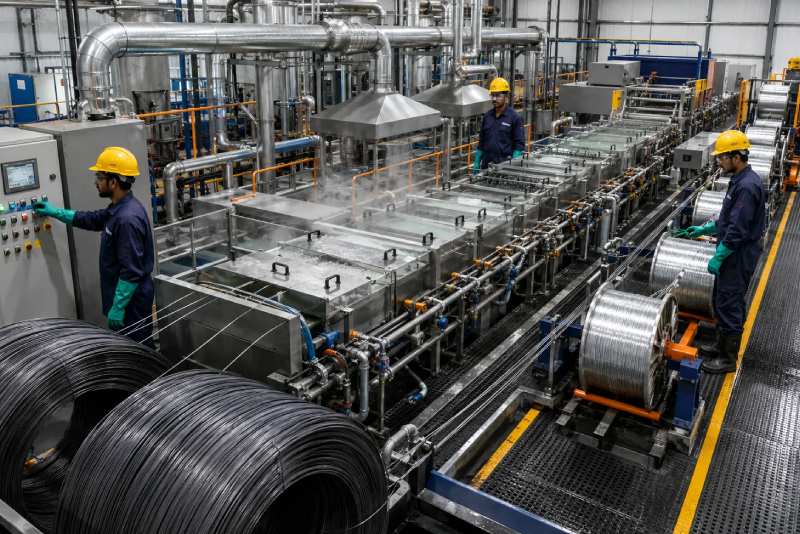
What is a wire plating and pickling plant?
In short:
A wire plating and pickling plant combines a pickling process, which removes scale and rust from wire surfaces using acid treatment, with an electroplating process that applies a protective metal coating for corrosion resistance and improved surface finish. Suntech Energreen designs surface treatment systems suited to industrial wire processing needs, helping manufacturers achieve consistent wire quality at scale. Understanding how these plants work helps buyers evaluate what configuration suits their specific wire processing requirements.
Introduction
Wire manufacturing involves more than just drawing metal into thin strands, the surface of that wire needs proper treatment to ensure durability, corrosion resistance, and compatibility with downstream applications. This is where wire pickling and plating processes become essential.
Suntech Energreen works with manufacturers who require reliable surface treatment systems for industrial wire processing, understanding that wire quality directly affects performance in applications ranging from construction to automotive components. Knowing what a wire plating and pickling plant actually does helps manufacturers make informed equipment decisions.
This guide explains what a wire plating and pickling plant is, how the pickling and plating processes work together, and why proper wire surface treatment matters for overall product quality.
What Does a Wire Plating and Pickling Plant Actually Do?
Wire pickling is a chemical cleaning process that removes rust, scale, and surface impurities from metal wire using acid treatment, preparing the surface for further processing. This step is essential because any residual scale or contamination can interfere with coating adhesion later in the process.
Once pickling is complete, wire typically moves through rinsing stages to remove residual acid before entering the plating process. Wire electroplating then applies a thin, uniform metal coating to the wire surface, which improves corrosion resistance, surface appearance, and sometimes electrical or mechanical properties depending on the coating material used.
Together, these combined processes ensure wire leaving the plant has a clean, properly coated surface suited to its intended industrial use, whether that’s construction reinforcement, automotive components, or general manufacturing applications.
The specific configuration of a wire plating and pickling plant depends on production volume, wire gauge, and the particular coating specifications required for the end application.
How the Wire Pickling and Plating Process Works
- Initial Wire Inspection - Incoming wire is checked for surface condition and consistency before entering the treatment process.
- Pickling Stage— Wire passes through an acid pickling bath that removes rust, scale, and surface impurities.
- Rinsing Stage— Treated wire is rinsed thoroughly to remove residual acid and prevent contamination of later stages.
- Surface Preparation — Additional cleaning or activation steps may be applied to optimize the surface for coating adhesion.
- Electroplating Stage — Wire moves through the plating process, where a metal coating is applied for corrosion protection and surface finish.
- Post-Plating Rinsing- The coated wire is rinsed again to remove any residual plating chemicals.
- Drying and Finishing — Wire is dried and prepared for spooling, cutting, or further downstream processing.
- Quality Inspection— Finished wire is checked for coating consistency and overall surface quality before dispatch.
Let’s Build the Right Solution Together
Whether you’re exploring ideas or planning a project, our team is here to listen, guide, and deliver solutions that fit your exact requirements.
Key Benefits of Proper Wire Pickling and Plating
Improved Corrosion Resistance — Properly plated wire withstands environmental exposure significantly better than untreated wire.
Better Coating Adhesion — Thorough pickling ensures the wire surface is properly prepared for uniform plating results.
Consistent Surface Quality — A well-configured plant delivers uniform results across continuous wire processing runs.
Enhanced Mechanical Performance — Certain coatings can improve wire durability and performance for specific applications.
Reduced Downstream Defects — Clean, properly treated wire reduces the risk of coating failures or surface defects later in manufacturing.
Suitability for Diverse Applications — Properly treated wire meets requirements across construction, automotive, and general industrial uses.
Why Wire Surface Treatment Matters for Manufacturers
Wire used in construction, automotive components, and general industrial applications is often exposed to environmental stress, mechanical wear, or corrosive conditions over its operational life. Without proper surface treatment, wire is significantly more vulnerable to rust and degradation, which can compromise structural or functional performance.
For manufacturers, investing in reliable pickling and plating equipment helps ensure consistent product quality, reducing the risk of customer complaints, product failures, or costly rework related to inadequate surface treatment.
Working with an experienced equipment manufacturer helps ensure the plant configuration matches specific wire gauge, production volume, and coating requirements, rather than adopting a generic system that may not suit the particular application.
Suntech Energreen's Surface Treatment Expertise
Suntech Energreen brings experience designing industrial surface treatment systems, including plating and pretreatment solutions suited to various metal processing needs.
Manufacturers evaluating wire plating and pickling equipment can learn more about Suntech Energreen and their approach to industrial surface treatment system design, or reach out via the contact page to discuss specific wire processing requirements.
Why Choose Suntech Energreen
Industrial Surface Treatment Expertise — Established experience in designing metal surface treatment systems for various industrial applications.
Customized System Design — Equipment configured around specific production volume, material type, and coating requirements.
Focus on Coating Consistency — Engineering approach centered on delivering uniform, reliable surface treatment results.
Technical Support — Guidance throughout the equipment selection and consultation process.
Long-Term Reliability — Systems designed for sustained operational performance with manageable maintenance needs.
If you’re evaluating wire plating and pickling plant options, visit the Suntech Energreen homepage to discuss your specific requirements.
Conclusion
A wire plating and pickling plant plays a critical role in preparing metal wire for durable, corrosion-resistant performance across construction, automotive, and general industrial applications. Understanding how the pickling and plating stages work together helps manufacturers evaluate the right equipment for their specific production needs.
Suntech Energreen brings industrial surface treatment expertise to help manufacturers achieve consistent, reliable wire processing results. Get in touch with Suntech Energreen to discuss your wire plating and pickling requirements.
Frequently Asked Questions (FAQ)
What is a wire plating and pickling plant?
A wire plating and pickling plant is industrial equipment that cleans and descales metal wire through an acid pickling process, then applies a protective coating through electroplating for corrosion resistance and surface quality.
Why is pickling necessary before wire plating?
Pickling removes rust, scale, and surface impurities that would otherwise interfere with proper coating adhesion during the plating process.
What types of coatings can be applied to wire during plating?
Coating type depends on the specific application, with options selected based on the corrosion resistance and surface properties required for the wire’s end use.
How does wire surface treatment affect product durability?
Properly pickled and plated wire resists corrosion and environmental degradation significantly better than untreated wire, improving long-term durability.
What factors affect wire plating plant configuration?
Configuration depends on wire gauge, production volume, and the specific coating specifications required for the intended industrial application.
Let’s Talk About Your Needs
Let’s talk about what you’re looking for. Share your requirements with us, and our team will guide you with the right solutions and clear answers.