How to Buy the Right Phosphating Plant for Automotive and Industrial Use
How to Buy the Right Phosphating Plant for Automotive and Industrial Use
In short:
Buying the right phosphating plant involves evaluating your production capacity needs, component types, process automation level, and long-term operational costs before selecting a manufacturer. Suntech Energreen designs phosphating plants suited to automotive and industrial applications, helping buyers match plant specifications to their specific coating and throughput requirements. Working with an experienced manufacturer ensures the plant delivers consistent coating quality while fitting your facility’s production demands.
Introduction
Selecting a phosphating plant is a significant investment decision for automotive component manufacturers and industrial facilities relying on metal surface treatment. The wrong choice can result in production inefficiencies, inconsistent coating quality, and costly rework down the line.
Suntech Energreen works with manufacturers across various industries to design phosphating systems suited to their specific production needs. Whether the application involves automotive parts requiring corrosion protection or general industrial components needing surface pretreatment, understanding what to look for in a phosphating plant makes the buying decision considerably easier.
This guide walks through the key factors to consider when buying a phosphating plant, the evaluation process, and what makes a phosphating system suitable for automotive and industrial use.
What Is the Phosphating Process and How Does It Work?
Phosphating is a chemical surface treatment process that converts a metal’s surface into a phosphate coating, which improves corrosion resistance and provides a better base for subsequent paint or coating adhesion. This process is widely used in automotive manufacturing for components exposed to environmental wear.
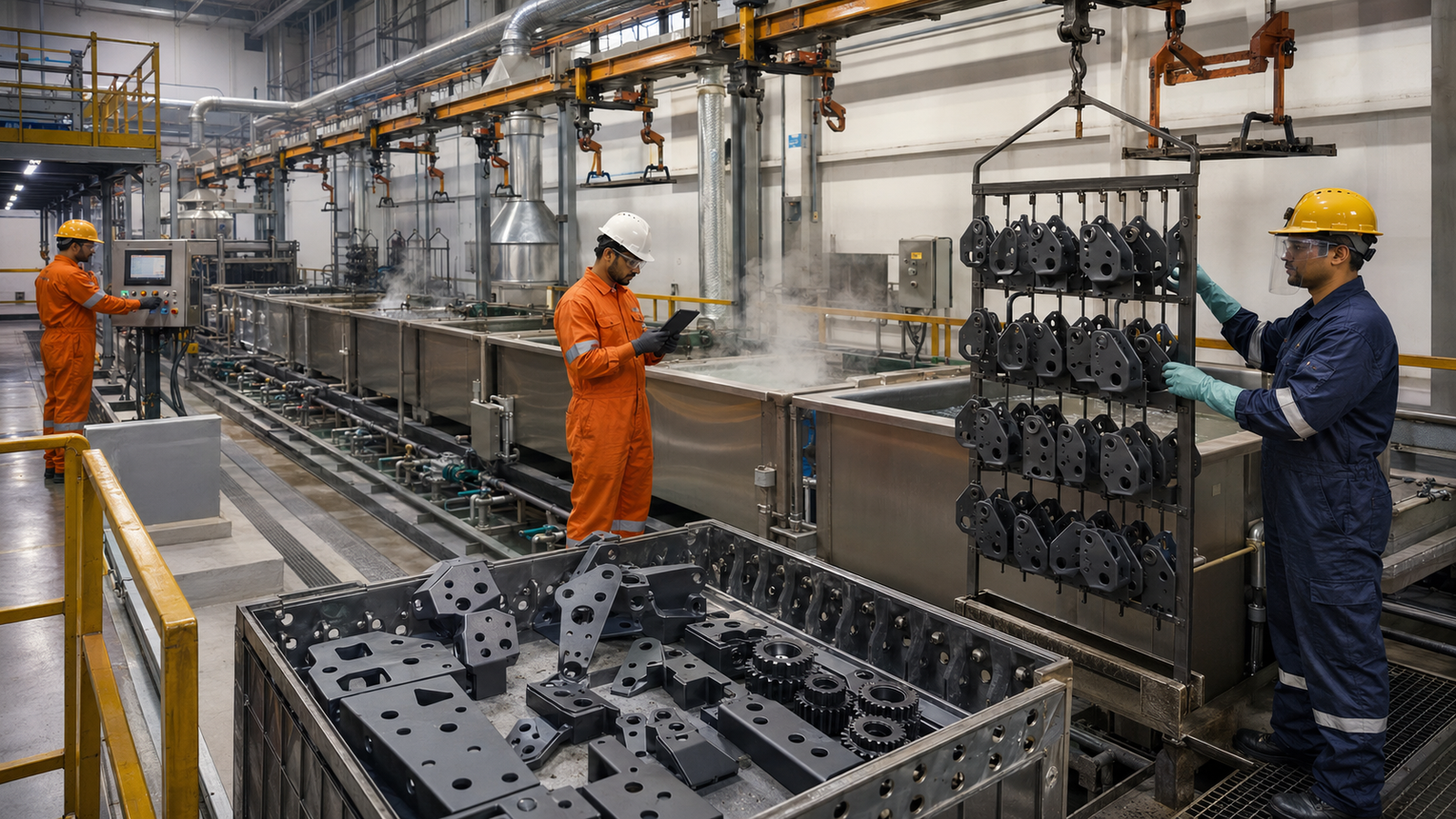
A phosphating plant typically involves multiple treatment stages, including cleaning, rinsing, phosphating, and post-treatment, each critical to achieving a consistent, high-quality coating. The specific configuration depends on the component type, production volume, and coating specifications required.
For automotive applications, phosphating plants often need to handle high production volumes with strict quality consistency, since components go on to become part of vehicles requiring long-term durability. Industrial applications may have different throughput and coating requirements depending on the end use.
Understanding this process helps buyers evaluate whether a particular phosphating plant configuration matches their specific production and quality requirements.
Step-by-Step Process for Choosing the Right Phosphating Plant
- Assess Production Volume Requirements - Determine your expected throughput to ensure the plant's capacity matches current and future production needs.
- Identify Component Types and Sizes — Different components may require specific plant configurations based on size, shape, and material composition.
- Define Coating Specifications — Clarify the required phosphate coating thickness and quality standards needed for your automotive or industrial application.
- Evaluate Automation Level — Decide between manual, semi-automatic, or fully automatic systems based on production scale and labor considerations.
- Review Manufacturer Experience — Assess the manufacturer's track record with similar automotive or industrial phosphating installations.
- Compare Operational Costs- Consider chemical consumption, energy usage, and maintenance requirements across different plant options.
- Request Technical Consultation — Work with the manufacturer to finalize plant specifications suited to your exact production requirements.
- Plan Installation and Commissioning — Coordinate installation timelines and operator training to ensure smooth plant startup.
Let’s Build the Right Solution Together
Whether you’re exploring ideas or planning a project, our team is here to listen, guide, and deliver solutions that fit your exact requirements.
Key Factors When Buying a Phosphating Plant
Production Capacity Match — The plant’s throughput capability should align with your current production volume and anticipated growth.
Component Compatibility — The system should accommodate the specific size, shape, and material of components being treated.
Coating Consistency — A well-designed plant delivers uniform phosphate coating quality across every processed batch.
Automation Level — Choosing the right balance of automation affects labor costs, throughput speed, and process consistency.
Operational Efficiency — Chemical usage, energy consumption, and maintenance needs directly impact long-term operational costs.
Manufacturer Support — Reliable technical support and spare parts availability reduce downtime risk over the plant’s operational life.
Why This Matters for Automotive and Industrial Applications
Automotive components require consistent corrosion protection since these parts often face demanding environmental conditions over a vehicle’s lifespan. A phosphating plant that doesn’t deliver consistent coating quality can lead to premature component failure, warranty issues, and reputational risk for manufacturers.
For broader industrial applications, phosphating plants need to balance efficiency with coating quality across potentially varied component types. Facilities producing diverse products benefit from systems flexible enough to handle different treatment requirements without compromising output consistency.
Working with an experienced manufacturer who understands both automotive-grade requirements and general industrial applications helps ensure the plant selected genuinely fits operational needs rather than requiring costly adjustments after installation.
Suntech Energreen's Phosphating Plant Solutions
Suntech Energreen manufactures phosphating plants designed for automotive and industrial surface treatment applications, offering systems built around each client’s specific production requirements.
Phosphating Plant Manufacturing — Custom-designed phosphating systems suited to varying production scales and component types. Explore phosphating plant solutions.
Phosphating Line Configuration — Complete phosphating line setups designed for consistent, efficient coating application. View phosphating line options.
For manufacturers evaluating phosphating plant options, learning more about Suntech Energreen or reaching out via the contact page is a good starting point for a technical consultation.
Why Choose Suntech Energreen
Industry Experience — Established expertise in designing phosphating plants for automotive and industrial surface treatment needs.
Customized Plant Design — Systems built around specific production volume, component types, and coating requirements.
Focus on Coating Consistency — Engineering approach centered on delivering uniform, reliable phosphate coating results.
Technical Support — Guidance throughout the selection, installation, and commissioning process.
Long-Term Reliability — Plant designs built for sustained operational performance with manageable maintenance needs.
If you’re evaluating phosphating plant options for automotive or industrial use, visit the Suntech Energreen homepage to discuss your specific requirements.
Conclusion
Buying the right phosphating plant requires carefully evaluating production needs, component compatibility, coating specifications, and manufacturer experience. For automotive and industrial applications where coating consistency directly affects component performance, this decision deserves thorough evaluation.
Suntech Energreen designs phosphating plants tailored to automotive and industrial surface treatment requirements. Get in touch with Suntech Energreen to discuss the right phosphating plant solution for your production needs.
Frequently Asked Questions (FAQ)
How do I buy the right phosphating plant for automotive and industrial use?
Evaluate your production volume, component types, required coating specifications, and automation needs, then work with an experienced manufacturer to finalize a plant configuration matching those requirements.
What factors affect phosphating plant coating quality?
Coating quality depends on proper process stages, chemical management, plant design consistency, and how well the system matches the specific components being treated.
Should I choose an automatic or manual phosphating plant?
This depends on production volume and labor considerations; higher-volume automotive applications often benefit from automated systems for consistency and efficiency.
How important is manufacturer experience when buying a phosphating plant?
Manufacturer experience significantly affects plant design quality, technical support availability, and long-term reliability, making it an important selection factor.
What ongoing costs should I consider with a phosphating plant?
Consider chemical consumption, energy usage, maintenance requirements, and spare parts availability when evaluating long-term operational costs.
Let’s Talk About Your Needs
Let’s talk about what you’re looking for. Share your requirements with us, and our team will guide you with the right solutions and clear answers.