
Electropolishing vs Mechanical Polishing for Medical Instruments — Key Differences
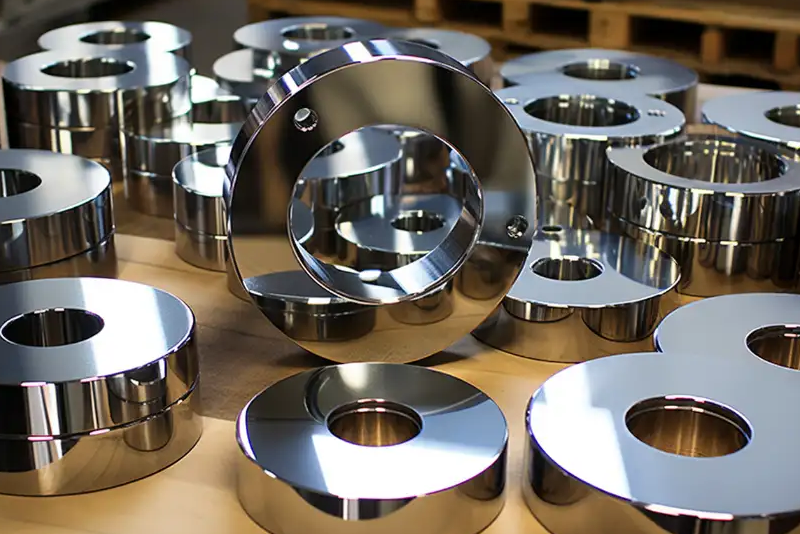
Electropolishing vs Mechanical Polishing for Medical Instruments — Key Differences
In short:
Electropolishing removes microscopic burrs and contaminants at a molecular level, giving stainless steel medical instruments a mirror-like, corrosion-resistant, bacteria-resistant finish. Mechanical polishing is faster and cheaper but can leave micro-scratches where bacteria hide. For surgical-grade instruments, Suntech Energreen’s medical polishing lining plants help manufacturers achieve consistent, hospital-grade surface finishing at scale.
Introduction
If you manufacture stainless steel medical instruments — forceps, scalpels, implants, or surgical tools — surface finishing isn’t optional. A poorly finished instrument can trap bacteria, corrode under sterilization, or fail quality audits. Many manufacturers default to mechanical polishing because it’s familiar, but electropolishing is increasingly the industry standard for critical medical device surface finishing.
This is especially relevant for manufacturers in Tamil Nadu’s growing medical device and surgical instrument manufacturing hubs, where export quality standards (ISO 13485, ASTM F86) demand consistent passivation. Suntech Energreen designs medical polishing lining plants that help manufacturers meet these standards without compromising production speed. Let’s break down exactly how these two processes differ and which one fits your production needs.
What Is Electropolishing vs Mechanical Polishing?
Electropolishing is an electrochemical process. The instrument is submerged in an electrolyte bath and connected to a current source. Metal ions are selectively removed from the surface, smoothing out peaks and valleys at a microscopic level. This leaves a clean, oxide-rich passive layer that resists corrosion and bacterial adhesion.
Mechanical polishing relies on physical abrasion — using buffing wheels, abrasive belts, or polishing compounds to grind down the surface. It’s a subtractive, contact-based process that depends heavily on operator skill and can vary from batch to batch.
Both aim for a smooth, shiny finish, but the way they get there — and the results at a microscopic level — are fundamentally different. This difference matters most in medical-grade applications where surface roughness (Ra value) directly impacts sterility and biocompatibility.
How to Choose Between Electropolishing and Mechanical Polishing
- Check Your Ra (Roughness Average) Requirement - Medical instruments typically need Ra values below 0.5 microns. Electropolishing consistently achieves this; mechanical polishing often struggles below 0.8 microns without heavy manual rework.
- Assess Corrosion Resistance Needs — Instruments repeatedly autoclaved or exposed to saline need maximum passivation. Electropolishing removes free iron from the surface, boosting chromium-oxide layer formation — critical for long-term corrosion resistance.
- Evaluate Instrument Geometry — Complex shapes with internal channels, hinges, or fine tips (like laparoscopic tools) are hard to reach with mechanical buffing wheels. Electropolishing reaches every surface uniformly, including internal cavities.
- Consider Production Volume — For high-volume batch production, electropolishing lines automate consistency across thousands of units. Mechanical polishing depends on manual labor, making it harder to scale without quality drift.
- Review Regulatory Compliance Needs — If you're exporting or supplying hospitals under ISO 13485 or FDA guidelines, electropolished finishes are often the documented standard for surgical-grade stainless steel.
- Factor In Turnaround Time and Cost - Mechanical polishing can be quicker and cheaper for low-spec, non-critical components. Electropolishing costs more upfront but reduces rejection rates and rework significantly.
- Test Both on a Sample Batch — Before committing to a full production line, run both finishes on sample instruments and check Ra values, passivation quality, and visual consistency under lab conditions.
Let’s Build the Right Solution Together
Whether you’re exploring ideas or planning a project, our team is here to listen, guide, and deliver solutions that fit your exact requirements.
Key Benefits
Superior Corrosion Resistance — Electropolishing strengthens the passive chromium-oxide layer, extending instrument lifespan under repeated sterilization cycles.
Bacteria-Resistant Surface — A smoother microscopic finish leaves fewer crevices for bacterial colonies to form, supporting better infection control.
Uniform Finish on Complex Parts — Electropolishing treats every exposed surface equally, even hard-to-reach internal geometries mechanical tools can’t access.
Reduced Micro-Burrs and Contamination — The electrochemical process removes embedded particles left behind by machining, unlike mechanical polishing which can smear contaminants across the surface.
Consistent Batch-to-Batch Quality — Automated electropolishing lines reduce dependency on manual skill, giving predictable results at scale.
Better Compliance Readiness — Meets stricter Ra and passivation benchmarks demanded by ISO 13485, ASTM F86, and hospital procurement standards.
Services / Offerings
Suntech Energreen supports medical device manufacturers with end-to-end surface treatment infrastructure:
Medical Polishing Lining Plant Manufacturing — Complete turnkey plants designed specifically for surgical and medical instrument electropolishing and finishing lines.
Medical Surface Treatment Solutions — Process engineering and equipment for consistent, compliant medical-grade surface finishing.
About Suntech Energreen — Learn about their engineering background and experience building surface treatment plants across India.
Contact Suntech Energreen — Get a consultation on setting up or upgrading your medical polishing line.
Why Location Matters
Tamil Nadu, particularly around Chennai and Vellore, has become a growing hub for medical device and surgical instrument manufacturing, with strong export demand to Southeast Asia, the Middle East, and Europe. Local access to plant manufacturers means faster installation support, quicker spare-part turnaround, and easier compliance audits.
Working with a plant manufacturer based in India also means engineering support that understands local water quality, electrolyte sourcing, and power infrastructure — all of which affect electropolishing line performance. Suntech Energreen’s on-ground experience across Tamil Nadu and Chennai gives manufacturers a reliable local partner instead of relying on slow international vendors for critical equipment.
For manufacturers scaling up surgical instrument production, this local proximity directly reduces downtime and speeds up commissioning of new polishing lines.
Why Choose Suntech Energreen
Specialized Medical-Grade Expertise — Purpose-built plants for medical and surgical instrument polishing, not generic industrial coating lines repurposed for medical use.
Compliance-Focused Engineering — Systems designed to help manufacturers hit Ra and passivation benchmarks required for ISO 13485 and export-grade certification.
End-to-End Plant Support — From design to installation to after-sales maintenance, reducing reliance on multiple vendors.
India-Wide Manufacturing Experience — Proven track record building electroplating, phosphating, and medical polishing plants across multiple industries.
Scalable Line Design — Plants engineered to handle growing production volumes without compromising finish consistency.
Responsive Local Support — Faster technical support and spare parts access compared to overseas suppliers.
If you’re setting up or upgrading a medical instrument polishing line, talk to Suntech Energreen’s team about a plant designed for your exact production scale and compliance needs.
Conclusion
Choosing between electropolishing and mechanical polishing comes down to what your medical instruments actually need — corrosion resistance, hygiene compliance, and consistency at scale point strongly toward electropolishing. Mechanical polishing still has its place for lower-spec parts, but for surgical-grade stainless steel, electropolishing is the industry-preferred standard.
If you’re planning to set up or upgrade a medical polishing lining plant, Suntech Energreen can help design a line matched to your production volume and compliance targets. Contact their team to discuss your requirements.
Frequently Asked Questions (FAQ)
Is electropolishing better than mechanical polishing for medical instruments?
For critical surgical instruments, yes — electropolishing achieves lower surface roughness, better corrosion resistance, and more consistent results. Mechanical polishing can still work for non-critical or lower-spec components.
Does electropolishing remove more material than mechanical polishing?
Electropolishing typically removes a very thin, controlled layer (a few microns), while mechanical polishing removal depends on abrasive grit and pressure, which is harder to control precisely.
Can electropolishing be used on all stainless steel medical instruments?
Most medical-grade stainless steels (300 series) respond well to electropolishing. Instrument geometry and alloy type should be checked with your equipment supplier for best results.
How long does electropolishing take compared to mechanical polishing?
Electropolishing cycles are typically faster per batch once the line is set up, while mechanical polishing depends heavily on manual labor speed and can slow down with complex geometries.
Is mechanical polishing completely unsuitable for medical instruments?
Not entirely — it’s sometimes used as a pre-finishing step before electropolishing, or for basic non-implantable tools where ultra-low Ra values aren’t mandatory.
Let’s Talk About Your Needs
Let’s talk about what you’re looking for. Share your requirements with us, and our team will guide you with the right solutions and clear answers.