
How Hot Dip Galvanizing Protects Steel from Corrosion for Decades
How Hot Dip Galvanizing Protects Steel from Corrosion for Decades
In short:
Hot dip galvanizing dips cleaned steel into a bath of molten zinc at around 450°C, forming multiple zinc-iron alloy layers that bond permanently to the steel surface. This coating acts as a physical shield and a sacrificial layer, meaning even if the surface gets scratched, the zinc keeps protecting the exposed steel. Suntech Energreen designs and manufactures hot dip galvanizing plants that help Indian manufacturers deliver this exact level of long-term corrosion protection, reliably and at scale.
Introduction
If you manufacture steel structures, fasteners, pipes, or fabricated components, corrosion is probably your biggest long-term cost. Rust doesn’t just look bad — it weakens load-bearing capacity, shortens product life, and drives up maintenance bills for your customers. That’s a real problem when steel is used in construction, power infrastructure, agriculture, or automotive applications across India’s varied climate zones.
Hot dip galvanizing has been the industry’s most trusted answer to this problem for over a century. Unlike paint or electroplating, it creates a thick, metallurgically bonded zinc coating that outlasts almost every other protective method. For manufacturers in Tamil Nadu and across India setting up or upgrading their coating line, understanding how this process works — and choosing the right plant setup — makes a direct difference to product quality and plant profitability. This is where Suntech Energreen’s engineering expertise comes in.
What Is Hot Dip Galvanizing?
Hot dip galvanizing is a surface treatment process where cleaned steel is immersed in a bath of molten zinc, typically maintained at approximately 450°C. During immersion, the zinc reacts with the iron in the steel to form a series of zinc-iron intermetallic layers, topped with a pure zinc outer layer.
This isn’t a surface coating in the way paint is. It’s a metallurgical bond — the zinc actually becomes part of the steel’s surface structure. That’s why galvanized coatings resist chipping, peeling, and abrasion far better than sprayed or painted finishes.
The result is dual protection: a barrier that physically blocks moisture and oxygen from reaching the steel, plus sacrificial protection, where zinc corrodes preferentially to steel even if the coating gets damaged. This combination is why hot dip galvanized steel routinely lasts 30 to 70 years, even in demanding outdoor environments.
How Hot Dip Galvanizing Works: Step-by-Step Process
- Surface Inspection and Preparation - Steel components are inspected for design suitability — vent holes, drain points, and weld quality are checked to ensure smooth zinc flow and coating uniformity during immersion.
- Degreasing — Steel is cleaned in an alkaline or acidic degreasing solution to remove oil, grease, and dirt. Any residue at this stage can cause coating defects later, so this step is non-negotiable.
- Pickling— The steel is dipped in a dilute acid bath, usually hydrochloric acid, to remove rust, mill scale, and oxidation from the surface. This exposes clean, reactive base metal needed for proper zinc bonding.
- Fluxing — Components pass through a zinc ammonium chloride flux bath. This step removes any remaining oxides and creates a protective layer that prevents re-oxidation before the steel enters the zinc bath.
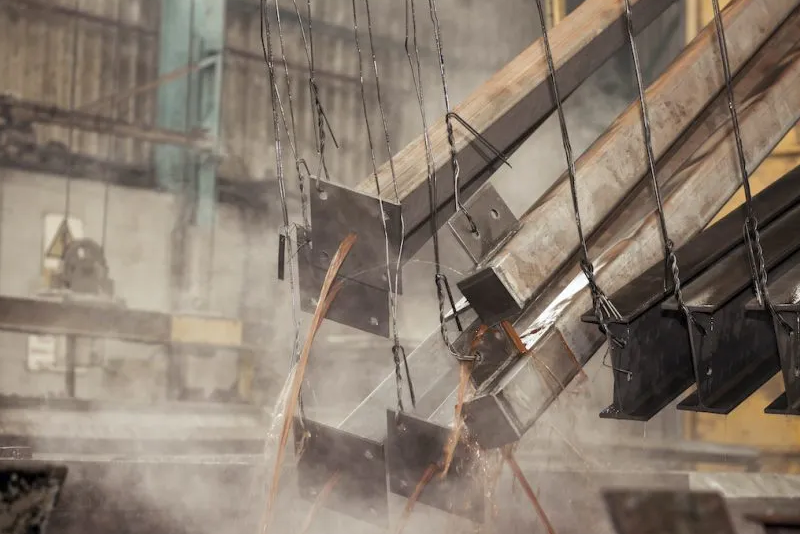
- Hot Dip Galvanizing (Zinc Immersion) — The steel is fully immersed in a molten zinc bath at around 450°C. A metallurgical reaction occurs between the iron and zinc, forming the layered zinc-iron coating that defines true hot dip galvanizing.
- Cooling and Quenching - After withdrawal, components are cooled in air or quenched in water. This solidifies the zinc coating and gives it its characteristic bright or matte-grey finish.
- Inspection and Quality Testing — Coating thickness, adhesion, and uniformity are tested against standards like IS 2629 and IS 4759 to confirm the galvanized layer meets required corrosion-resistance specifications.
Let’s Build the Right Solution Together
Whether you’re exploring ideas or planning a project, our team is here to listen, guide, and deliver solutions that fit your exact requirements.
Key Benefits of Hot Dip Galvanizing
Long-Term Corrosion Resistance — Galvanized steel can protect structures for 30 to 70+ years without repainting or recoating, depending on the environment.
Complete Coverage — Molten zinc reaches every surface, including internal corners, recesses, and threads, unlike spray or brush coatings that miss hidden areas.
Sacrificial Protection — Even if the coating is scratched, zinc corrodes first, actively protecting the exposed steel underneath instead of allowing rust to spread.
Cost-Effective Over Time — Lower lifecycle costs compared to painted steel, since galvanized coatings need little to no maintenance for decades.
High Impact and Abrasion Resistance — The metallurgically bonded coating withstands handling, transport, and installation stress far better than surface-applied coatings.
Faster Turnaround for Manufacturers — A well-engineered hot dip galvanizing plant processes large batches efficiently, supporting high-volume industrial production schedules.
Suntech Energreen's Hot Dip Galvanizing Solutions
Suntech Energreen builds complete, industrial-grade hot dip galvanizing systems for manufacturers who need consistent, high-quality coating output.
Hot Dip Galvanizing Plant Manufacturer in India — End-to-end plant design covering pretreatment, galvanizing bath, and cooling stages built for Indian industrial conditions.
Hot Dip Galvanizing Plants — Custom-engineered galvanizing line configurations sized to your production volume and component range.
These systems are engineered for process consistency, energy efficiency, and long operational life, so your galvanizing line delivers uniform coating quality batch after batch.
Why Location Matters for Hot Dip Galvanizing Plant Setup
India’s climate varies sharply — coastal humidity in Tamil Nadu, industrial pollution near manufacturing hubs, and monsoon-driven moisture all accelerate steel corrosion differently. A galvanizing plant built without accounting for these regional factors risks inconsistent coating performance.
Suntech Energreen’s engineering team understands these local conditions firsthand, working closely with manufacturers across Tamil Nadu, Chennai, and wider India. This local expertise means plant design accounts for water quality, ambient humidity, and regional steel specifications from day one.
Having a manufacturing partner who understands both the metallurgy and the local industrial environment reduces plant commissioning issues and gets your line to full production faster. That’s a real advantage over generic, one-size-fits-all plant suppliers.
Why Choose Suntech Energreen
Engineering-First Approach — Every galvanizing plant is designed around your specific component sizes, production volume, and quality targets, not a fixed template.
Proven Industrial Experience — Years of building surface treatment plants across galvanizing, electroplating, and phosphating applications for Indian manufacturers.
Complete Turnkey Plants — From pretreatment tanks to the zinc bath and cooling systems, Suntech Energreen delivers fully integrated, ready-to-run lines.
Quality-Focused Fabrication — Plants built to support compliance with IS 2629 and IS 4759 coating standards.
Local Support Advantage — On-ground technical support across Tamil Nadu and India for commissioning, troubleshooting, and maintenance.
Scalable Plant Designs — Systems that grow with your production needs, from mid-size fabrication units to large industrial galvanizing operations.
Ready to set up a reliable hot dip galvanizing line? Contact Suntech Energreen today to discuss your plant requirements.
Conclusion
Dip spin machine maintenance isn’t optional if you want consistent coating quality and predictable production output. Daily basket checks, weekly tank cleaning, and monthly spindle alignment reviews prevent most common coating defects and unplanned downtime.
Suntech Energreen builds dip spin machines designed for maintenance ease, giving industrial coating units across Tamil Nadu and India a reliable equipment partner. If your coating line needs a new dip spin machine or servicing guidance, reach out to Suntech Energreen today.
Frequently Asked Questions (FAQ)
How long does hot dip galvanized steel last?
Hot dip galvanized steel typically lasts 30 to 70 years depending on environmental exposure. Coastal and industrial zones with higher corrosion factors sit toward the lower end, while drier inland environments last longer.
What is the difference between hot dip galvanizing and electroplating?
Hot dip galvanizing immerses steel in molten zinc, creating a thick, metallurgically bonded coating. Electroplating uses an electric current to deposit a much thinner zinc layer, offering less impact and abrasion resistance.
Can hot dip galvanized steel be painted?
Yes, galvanized steel can be painted after proper surface preparation, often called duplex coating. This combination adds extra corrosion protection and allows for custom color finishes.
Does hot dip galvanizing protect steel from all types of corrosion?
It protects effectively against most atmospheric and moisture-based corrosion. However, extremely acidic or alkaline environments may require additional protective measures alongside galvanizing.
What steel components are commonly hot dip galvanized?
Structural steel, pipes, fasteners, agricultural equipment, transmission towers, and fabricated frameworks are commonly hot dip galvanized for long-term outdoor durability.
Let’s Talk About Your Needs
Let’s talk about what you’re looking for. Share your requirements with us, and our team will guide you with the right solutions and clear answers.