
Designing an Efficient Auto Plating and Passivation Line
Designing an Efficient Auto Plating and Passivation Line
In short:
Designing an efficient auto plating and passivation line requires precise control of process parameters, optimized workflow, and automation using PLC systems. In robotic hot dip galvanizing and electroplating, proper system design ensures uniform coating, reduced defects, and higher productivity. A well-designed line improves corrosion resistance, minimizes waste, and supports consistent quality in industrial manufacturing.
Introduction
In India’s industrial sector, surface treatment quality directly affects product life and performance. Industries such as automotive, fasteners, and construction rely heavily on plating and passivation processes. However, inefficient system design can lead to uneven coating, high rejection rates, and increased operational costs.
Many traditional plating setups lack proper process flow and control. This results in inconsistent output and poor corrosion resistance. With rising competition and export demands, manufacturers need reliable and efficient systems.
Designing an efficient auto plating and passivation line is essential to achieve uniform quality and productivity. By integrating automation and robotic hot dip galvanizing, manufacturers can ensure better control, reduced errors, and compliance with global standards.
What is an Auto Plating and Passivation Line?
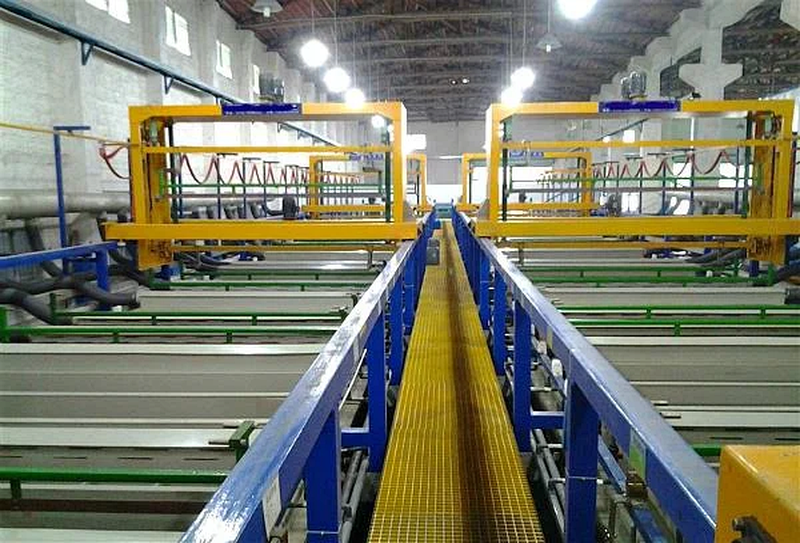
An auto plating and passivation line is a fully automated system designed to coat metal components and enhance their corrosion resistance. It integrates multiple stages such as cleaning, plating, passivation, and drying into a continuous workflow.
In robotic hot dip galvanizing, components are dipped into molten zinc under controlled conditions. In electroplating systems, metal coating is applied using electrical current.
Passivation is applied after plating to form a protective chemical layer. This improves corrosion resistance and extends product life.
These systems use PLC controls, sensors, and automated handling equipment to maintain process accuracy.
Manufacturers can explore advanced solutions through Suntech Energreen’s surface treatment systems, designed for efficient industrial operations.
How the System Works (Step-by-Step)
A well-designed auto plating and passivation line follows a structured process flow.
1. Controlled Loading
Parts are loaded using automated systems to ensure proper alignment.
2. Degreasing
Oil and contaminants are removed using controlled chemical cleaning.
3. Pickling
Acid treatment removes rust and prepares the surface.
4. Rinsing
Multiple rinsing stages prevent contamination between processes.
5. Plating or Galvanizing
Components are coated using electroplating or robotic hot dip galvanizing.
Automation ensures precise control of time, temperature, and movement.
6. Passivation
A protective chemical layer is applied to enhance corrosion resistance.
7. Drying
Automated drying systems ensure a clean and uniform finish.
8. Inspection and Quality Control
Sensors and monitoring systems check coating thickness and surface quality.
Each stage is optimized for consistency, ensuring high-quality output.
Let’s Build the Right Solution Together
Whether you’re exploring ideas or planning a project, our team is here to listen, guide, and deliver solutions that fit your exact requirements.
Benefits & Performance Advantages
An efficiently designed auto plating and passivation line offers several advantages:
- Improved coating quality with uniform thickness
- Enhanced corrosion resistance for longer product life
- Consistent process control across all batches
- Reduced manual errors and operator dependency
- Higher productivity with continuous operation
- Optimized chemical and energy usage
- Lower rejection rates and improved quality assurance
- Long-term cost efficiency through reduced waste
These benefits help manufacturers achieve reliable and scalable production.
Practical Industrial Applications
Efficient plating and passivation systems are used across multiple industries.
Automotive Industry
Used for coating high-volume components such as fasteners and structural parts.
Learn more about automotive surface treatment systems.
Aerospace Industry
Requires precise and defect-free coatings for critical components.
Explore aerospace surface treatment.
Medical Devices
Ensures clean, corrosion-resistant surfaces for medical equipment.
Refer to medical surface treatment solutions.
Fasteners Industry
High-volume production demands consistent coating quality.
See fasteners surface treatment.
Household & Consumer Products
Improves durability and appearance of everyday products.
Check household applications.
General Manufacturing
Used in construction, electrical, and engineering industries for reliable performance.
Expert Insight: Suntech Energreen Perspective
Suntech Energreen focuses on designing efficient and reliable auto plating and passivation lines tailored to industry needs.
Their expertise includes:
- Custom-engineered surface treatment plants
- Fully automated and PLC-controlled systems
- Integration of robotic hot dip galvanizing technologies
- End-to-end support from design to installation
- Proven experience across multiple industries
Manufacturers can evaluate real-world performance through Suntech Energreen’s project references, which highlight successful implementations.
Their solutions are designed to deliver consistent quality, improve efficiency, and meet global standards.
Conclusion
Designing an efficient auto plating and passivation line is essential for achieving high-quality surface treatment in modern manufacturing. By integrating automation and robotic hot dip galvanizing, industries can ensure consistent coating, improved corrosion resistance, and higher productivity.
A well-designed system reduces errors, optimizes resources, and supports large-scale production. For manufacturers aiming to meet global standards, investing in advanced plating systems is a smart decision.
To upgrade your surface treatment operations, explore Suntech Energreen’s solutions or contact Suntech Energreen for project consultation.
Frequently Asked Questions (FAQ)
1. What factors are important in designing a plating line?
Key factors include process flow, automation level, chemical control, and production capacity.
2. How does robotic hot dip galvanizing improve efficiency?
It ensures precise control of dipping time and temperature, resulting in uniform coating and faster processing.
3. Why is passivation important after plating?
Passivation enhances corrosion resistance and protects the plated surface from oxidation.
4. Can plating lines be customized?
Yes. Systems can be designed based on component size, production volume, and industry requirements.
5. How does automation improve system performance?
Automation ensures consistent process control, reduces errors, and increases productivity.
Let’s Talk About Your Needs
Let’s talk about what you’re looking for. Share your requirements with us, and our team will guide you with the right solutions and clear answers.