
Benefits of Automated Plating Lines for Metal Finishing
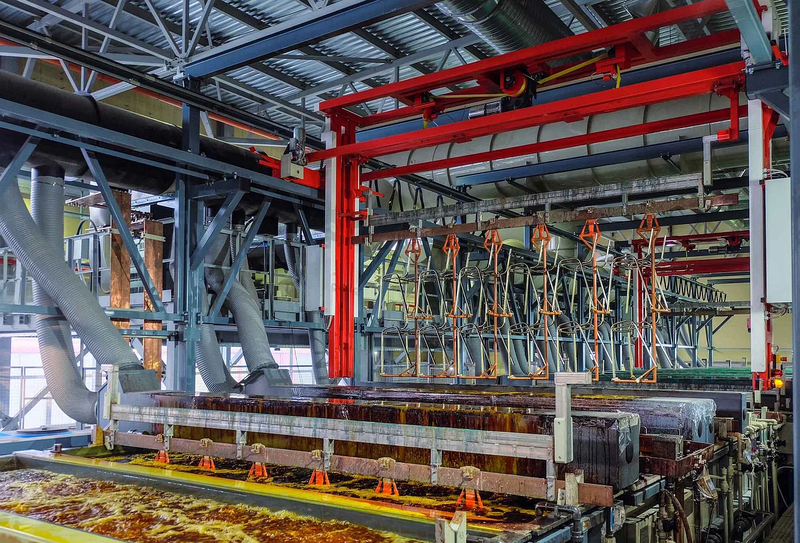
Benefits of Automated Plating Lines for Metal Finishing
In short:
An Auto Plating & Passivation Line improves metal finishing by delivering consistent coating quality, better corrosion resistance, and higher productivity. It automates the plating and passivation process using controlled systems, reducing human errors and ensuring uniform results. These systems help manufacturers achieve reliable surface treatment, lower rejection rates, and long-term cost efficiency across industries like automotive, aerospace, and general manufacturing.
Introduction
In India’s growing manufacturing sector, product durability and finish quality are becoming more important than ever. Industries are expected to meet global standards while keeping production costs under control. However, traditional manual plating processes often lead to uneven coating, corrosion issues, and high rejection rates.
Manufacturers also face challenges like labor dependency, inconsistent results, and difficulty in maintaining process control. These issues directly impact product life and customer satisfaction.
An Auto Plating & Passivation Line solves these problems by introducing automation and precision into metal finishing. It ensures uniform coating, better corrosion protection, and improved process efficiency. As industries move toward Industry 4.0 and smart manufacturing, automated plating systems are becoming a key part of modern production lines in India.
What Is an Auto Plating & Passivation Line?
An Auto Plating & Passivation Line is an automated system designed for metal surface treatment. It combines electroplating and passivation processes in a controlled environment.
- Electroplating adds a thin metal layer on components using electric current.
- Passivation creates a protective chemical layer that improves corrosion resistance.
In an Auto plating plant, components move through different tanks using automated handling systems like hoists, conveyors, or robotic arms. Each stage is controlled by PLC systems to maintain accuracy in time, temperature, and chemical levels.
An Auto plating machine ensures repeatability and uniformity, which is difficult to achieve with manual operations. This makes it ideal for high-volume and high-precision manufacturing environments.
How the System Works (Step-by-Step)
An automated plating system follows a structured process to ensure consistent results:
1. Component Loading
Parts are loaded onto fixtures, racks, or barrels based on size and geometry.
2. Cleaning & Degreasing
Oil, dirt, and contaminants are removed to prepare the surface.
3. Surface Activation
Acid treatment activates the surface for better coating adhesion.
4. Electroplating Process
Components are immersed in plating baths where metal ions deposit uniformly using controlled electrical current.
5. Rinsing Stages
Multiple rinsing tanks remove excess chemicals and prevent contamination.
6. Passivation Treatment
A chemical layer is formed to enhance corrosion resistance and surface stability.
7. Drying Process
Hot air dryers or centrifugal systems remove moisture completely.
8. Inspection & Unloading
Finished components are checked for coating thickness and quality before dispatch.
Automation ensures each step runs with precision, improving consistency and reducing process variation.
Let’s Build the Right Solution Together
Whether you’re exploring ideas or planning a project, our team is here to listen, guide, and deliver solutions that fit your exact requirements.
Benefits & Performance Advantages
Using an Auto Plating & Passivation Line offers several performance advantages:
- Uniform coating quality across all components
- High corrosion resistance for longer product life
- Consistent thickness control through automation
- Reduced human error and process variability
- Higher production efficiency and faster turnaround
- Lower rejection rates and rework costs
- Optimized chemical consumption and reduced waste
- Better compliance with global quality standards
- Long-term cost savings through efficient operations
These benefits make automated plating systems essential for modern manufacturing setups.
Practical Industrial Applications
An Auto plating plant is used across multiple industries where surface quality and durability are critical.
Automotive Industry
Used for coating engine parts, fasteners, and structural components. These parts require high corrosion resistance and durability. Learn more about automotive surface treatment solutions.
Aerospace Industry
Critical components need precise coating and protection against extreme environments. Explore aerospace surface treatment systems.
Medical Devices
Surgical tools and implants require clean, corrosion-resistant surfaces. See medical surface treatment applications.
Fasteners Industry
Bolts, nuts, and screws require plating for rust prevention and longer life. Learn about fasteners surface treatment systems.
Household & Consumer Products
Used in fittings, appliances, and decorative parts for improved finish and durability. Explore household finishing solutions.
General Manufacturing
Widely used in fabrication, heavy engineering, and industrial component production.
Manufacturers can also explore different system options through surface treatment product solutions.
Expert Insight: Suntech Energreen Perspective
The performance of an Auto Plating & Passivation Line depends on design, process control, and customization. Every industry has different requirements based on component type, production volume, and coating specifications.
Suntech Energreen focuses on engineering solutions that match these specific needs. Their approach includes:
- Designing custom surface treatment plants based on application
- Using PLC-controlled automation for precise operation
- Integrating efficient material handling systems
- Ensuring optimal chemical usage and process stability
- Providing complete support from design to installation
With experience across industries, they understand real manufacturing challenges and deliver practical solutions. You can review completed projects through project references and case studies.
Conclusion
An Auto Plating & Passivation Line is a critical solution for modern metal finishing. It improves coating quality, enhances corrosion resistance, and increases production efficiency. By reducing manual errors and ensuring process control, it helps manufacturers achieve consistent and reliable results.
As industries in India continue to grow and adopt global standards, automated plating systems are becoming essential for long-term success. They not only improve product performance but also reduce operational costs over time.
To upgrade your surface treatment process and improve manufacturing efficiency,
contact Suntech Energreen for project consultation
or explore advanced solutions tailored to your industry needs.
Frequently Asked Questions (FAQ)
1. How does an Auto plating machine improve production efficiency?
It automates repetitive processes, reduces manual intervention, and ensures faster cycle times. This leads to higher output and consistent quality.
2. Why is passivation important in metal finishing?
Passivation creates a protective layer that prevents corrosion. It increases the life of metal components, especially in harsh environments.
3. Is an Auto plating plant suitable for small-scale industries?
Yes, systems can be customized based on production requirements. Even small-scale manufacturers can benefit from improved quality and reduced rework.
4. What materials can be processed in an Auto Plating & Passivation Line?
Common materials include steel, stainless steel, brass, and aluminum, depending on the plating and passivation process used.
5. How does automation reduce defects in plating?
Automation controls process parameters precisely, reducing variation and ensuring uniform coating across all parts.
Let’s Talk About Your Needs
Let’s talk about what you’re looking for. Share your requirements with us, and our team will guide you with the right solutions and clear answers.